Leave Your Message
0%

Picking the right nickel sheet supplier in 2026 isn’t just about crunching price lists — there’s a lot more to consider. Things like the material grade, how tight the thickness tolerances are, surface finish, and how reliable their delivery is can really throw off your entire production schedule if they’re not up to snuff. I’ve put together a guide that looks at some of the big names out there—like Special Metals, VDM Metals, Haynes International, Aperam, and Nippon Yakin—and what they bring to the table. Keep in mind, their capabilities can vary depending on where you’re based, the specific alloy you need, and how much you’re ordering.

When it comes to quality, don’t just take their word for it. Always ask for mill test certificates, traceability back to heat numbers, and check if they’re compliant with standards like ASTM or ASME. Having a clear inspection process in place is also a good indicator that they keep quality in check. For tougher environments, pure nickel sheets can be a good choice—they tend to resist corrosion pretty well and handle heat like a champ—but they’re not automatically the best fit for every job. Picking the right alloy really depends on the specifics—like operating temperature, chemicals involved, forming needs, and pressure conditions. And if the supplier offers technical support, that can save you a lot of headaches and money by preventing costly trial and error.

Availability? That can change pretty fast, so it’s something you want to keep an eye on.

My overview touches on things like how much experience a manufacturer has, whether they have solid quality systems documented, their production capacity, and how well they support customers. But heads up—there’s no one-size-fits-all ranking here. A big, well-established mill might give you more consistency, but a smaller, specialized distributor could be quicker when it comes to smaller orders. Local stock, customs, and minimum order quantities also play a super important role in your decision. Always verify their current certifications, product dimensions, and lead times directly with each company—public info can get outdated pretty quickly. That’s why it’s so important to do your homework and compare thoroughly rather than just going by their marketing hype."
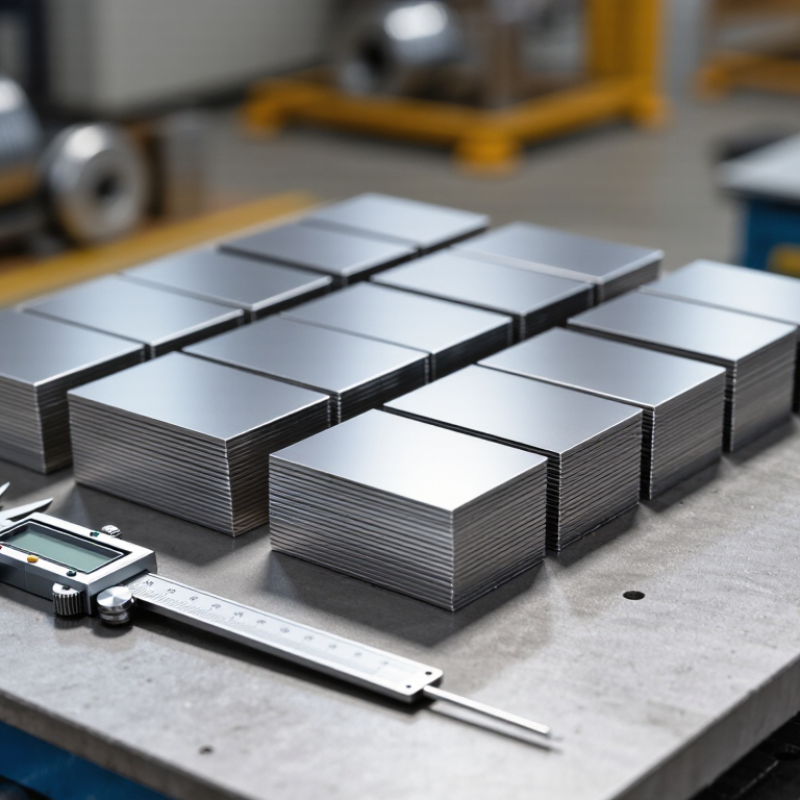
2026 Top Nickel Sheet Suppliers and Manufacturers?

Nickel Sheet Grades: UNS N02200 and N02201 with 99.0% Minimum Nickel

2026 Top Nickel Sheet Suppliers and Manufacturers?

For 2026 sourcing, “top” should mean verified quality, not attractive catalog language. UNS N02200 and UNS N02201 Nickel Alloy Sheet contain at least 99.0% nickel. N02201 offers tighter carbon control, usually below 0.02%, while N02200 permits higher carbon content. This difference matters during welding and high-temperature service. ASTM B162 remains a useful purchasing reference for commercially pure nickel plate, sheet, and strip.

The USGS Mineral Commodity Summaries 2025 reported approximately 3.7 million metric tons of global nickel mine production in 2024. That scale supports broad availability, but it does not guarantee consistent sheet quality. A dependable manufacturer should provide heat numbers, chemical analysis, tensile results, dimensional tolerances, and surface inspection records. Check the actual certificate. Not just a sales promise. In practice, clean edges and uniform thickness can prevent costly fitting problems.

Tips: Match N02201 with low-carbon welding requirements. Request ASTM compliance and independent inspection when risk is high. Confirm whether “sheet” means cold-rolled or hot-rolled material. The wording is sometimes unclear. I would also compare the quoted nickel content with the full chemistry table, because a 99.0% minimum alone cannot predict forming behavior. USGS data shows a large market, yet traceability remains the practical test for trustworthy supply.

ASTM B162 Requirements: Dimensions, Chemistry, Tolerances, and Testing Data

When evaluating 2026 nickel sheet suppliers and manufacturers, ASTM B162 should guide the technical review. Nickel Sheet Metal must match the specified grade, dimensions, chemistry, and testing requirements.

ASTM B162 does not create one universal sheet size. Thickness, width, and length usually follow standard tolerance tables and the purchase order. Buyers should verify actual measurements at several points, especially near edges and corners. A thin sheet can vary more than expected.

Flatness also deserves attention during inspection. Grade-specific chemistry controls nickel content, carbon, iron, copper, manganese, sulfur, and silicon. Nickel 200 and Nickel 201 require careful carbon verification.

Testing data should be traceable to the material heat number. A reliable mill test report normally identifies chemical analysis, tensile strength, yield strength, elongation, and applicable hardness results. Dimensional inspection records can expose problems that a chemistry report cannot.

Surface examination should check scratches, laminations, pits, and rolled-in particles under suitable lighting. Ask whether tests were performed according to ASTM methods or an agreed equivalent.

I would not accept a certificate with only generic compliance language. It is incomplete evidence. The supplier should clarify sampling frequency, test location, calibration status, and retest rules.

In practice, small documentation gaps often create larger receiving delays. A pre-shipment review can prevent that. Still, purchasers should compare the latest ASTM B162 edition with their order, because requirements and interpretations may change.

2026 Market Overview: Nickel Supply, Demand, and Class 1 Nickel Trends

2026 Market Overview: Nickel Supply, Demand, and Class 1 Nickel Trends

The 2026 nickel market is balancing strong supply growth against uneven industrial demand. New refining capacity is expanding, especially across Southeast Asia. However, project delays, energy costs, and permitting issues can quickly change delivery forecasts. Class 1 nickel remains important because it supports high-purity alloys, electroplating, and selected battery applications.

Stainless steel still absorbs a major share of global nickel demand. Battery demand is growing, but chemistry changes are reducing nickel intensity in some vehicle platforms. This creates a less predictable outlook for refined nickel producers and Raw Metal Sheet manufacturers. Buyers should examine thickness tolerance, surface finish, heat treatment, and mill certificates before choosing a supplier. A bright sheet may still fail during forming if internal stress is poorly controlled.

Supply reliability will matter more than headline capacity in 2026. Established manufacturers with documented quality systems can provide better batch consistency and traceability. Yet no forecast is perfect. Inventory data can lag, and regional premiums may shift quickly when transport routes tighten. One blind spot remains. Recycled nickel could become more influential, but collection and processing capacity vary widely by region. Experienced procurement teams should compare Class 1 purity, lead times, packaging quality, and technical support rather than price alone. A small edge defect can become expensive after cutting, bending, or welding.

Top Nickel Sheet Manufacturers by Region, Capacity, and Certification

The 2026 nickel sheet market is shaped by regional scale, conversion technology, and certification depth. The U.S. Geological Survey reported global mined nickel production near 3.7 million metric tons in 2024, with Indonesia contributing about 2.2 million tons. This upstream concentration supports strong Asia-Pacific capacity for nickel alloy melting, hot rolling, and precision finishing. However, ore volume does not equal sheet quality.

For procurement teams, the strongest Asia-Pacific suppliers usually offer wider coil lines, vacuum melting, and quicker production for standard Sheet Metal Items. European manufacturers tend to compete through aerospace, chemical, and energy specifications, supported by EN 10204 inspection documents and ISO 9001 systems. North American producers often focus on traceability, low-volume engineering orders, and certifications such as AS9100 or pressure-equipment compliance. Capacity figures can be misleading. Some reports combine melting, plate, and sheet output.

Independent data from the International Stainless Steel Forum and market studies by industry research firms indicate continuing demand from power generation, chemical processing, and electric-vehicle equipment. Buyers should compare annual sheet capacity, minimum thickness, width tolerance, and mill-test documentation. Certification must be checked against the actual production site, not only the corporate website. That distinction is easy to miss. A supplier may hold ISO certification while outsourcing critical rolling steps. Trial orders, surface inspections, and third-party testing remain practical safeguards, even when published rankings look convincing.

Supplier Comparison: Thickness Ranges, Sheet Sizes, MOQ, and Lead Times

In 2026, nickel sheet buyers compare more than quoted price. Thickness, sheet size, MOQ, and lead time often determine project success. Common suppliers offer thin sheets from about 0.05 mm, while heavier sheets can exceed 25 mm. Not every manufacturer stocks the complete range. Confirm whether the quoted thickness is nominal or measured after rolling.

Standard sizes often include 1000 × 2000 mm, 1220 × 2440 mm, and 1500 × 3000 mm. Custom widths can reduce trimming waste, but they may increase the MOQ. For regular grades, minimum orders may begin near 100 kg. Custom alloys or tight tolerances may require 500 kg or more. Request flatness data, surface condition, test certificates, and packaging photos. Small orders can look convenient.

Typical lead times range from one to four weeks for stock material and six to twelve weeks for made-to-order sheets. Add transit, inspection, and documentation time before confirming delivery. In my sourcing checks, the fastest quotation was not always the most reliable. Stock status changed during negotiation. A written schedule helps, but it is not a guarantee. Suppliers should provide the nickel grade, heat number, inspection standard, and replacement procedure. Ask how sheets are protected from scratches and moisture. That detail is often missed.

2026 Top Nickel Sheet Suppliers and Manufacturers? - Supplier Comparison: Thickness Ranges, Sheet Sizes, MOQ, and Lead Times

Comparison of common nickel-sheet supply channels and typical commercial purchasing conditions

Supply Channel Common Nickel Grades Typical Thickness Range Typical Sheet Sizes Typical MOQ Typical Lead Time Available Forms Typical Standards Best Suited For
Integrated nickel mill Nickel 200/201, 600, 625, 718 0.5–25 mm 1,000 × 2,000 mm to 1,500 × 3,000 mm; larger sizes by order 500–2,000 kg per grade and size 8–16 weeks Cold-rolled sheet, hot-rolled plate, cut-to-length material ASTM B162, B168, B443, B670; ASME SB specifications where applicable Large-volume chemical processing, power generation, and aerospace programs
Specialty alloy service center Nickel 200/201, 400, 600, 625, 800/800H, 825 0.3–50 mm 600 × 1,200 mm to 1,500 × 3,000 mm; custom cutting available 25–250 kg or 1–10 sheets 2–8 weeks from stock; 8–14 weeks for mill orders Sheet, plate, blanks, strips, waterjet-cut and saw-cut pieces ASTM/ASME B-series specifications; EN 10095 and EN 10204 inspection documents often available Engineering projects requiring mixed grades, small batches, and traceability
Regional industrial distributor Nickel 200/201, 600, 625, 718, 825 0.5–12.7 mm 1,000 × 2,000 mm and 1,220 × 2,440 mm; stocked sizes vary 1 sheet or approximately 10–50 kg 2–10 business days from local stock; 4–10 weeks for replenishment Standard sheet, plate, slit strip, sheared blanks ASTM B162, B168, B443, B670; material test reports commonly supplied Maintenance, replacement parts, fabrication, and urgent requirements
Custom fabrication specialist Nickel 200/201, 600, 625, 718, 800H, 825 0.5–100 mm, depending on cutting process Up to approximately 2,000 × 6,000 mm before cutting; project-specific dimensions 1 finished part, drawing, or small production batch 3–12 weeks, depending on geometry, testing, and quantity Laser-cut, waterjet-cut, formed, machined, welded, and assembled parts Customer drawing requirements plus applicable ASTM/ASME material standards Heat exchangers, electrical components, reactors, and complex fabricated assemblies
Online stock and small-order channel Nickel 200/201, 600, 625, and selected 718 products 0.05–6 mm 300 × 300 mm to 1,000 × 2,000 mm; standard inventory sizes 1 piece or 1–10 kg 1–7 business days when in stock; 3–8 weeks for special orders Thin sheet, foil-like material, small blanks, and sample pieces Grade and thickness certificates vary; verify ASTM/EN compliance before purchase Prototype work, laboratories, repairs, educational projects, and sample testing
Export-oriented project supplier Nickel 200/201, 300-series nickel alloys, 600, 625, 718, 800/800H, 825 0.3–80 mm 1,000 × 2,000 mm to 2,000 × 6,000 mm; custom sizes subject to yield 100–500 kg for standard products; higher for custom production 6–14 weeks, excluding international transportation and customs Sheet, plate, cut blanks, formed parts, and export-packed material ASTM/ASME, EN, JIS, and inspection documents such as EN 10204 Type 3.1 when contracted International EPC projects, repeat production, and consolidated procurement

Purchasing note: The figures above are typical industry ranges for 2026 planning and are not binding quotations. Actual availability, minimum order quantity, lead time, tolerances, surface finish, certification, and freight terms should be confirmed for the required nickel grade and specification.

Quality Verification: PMI Testing, Mill Certificates, ISO 9001, and Traceability

In 2026, nickel sheet buyers need evidence, not polished promises. A capable supplier should explain how each heat is verified before shipment. Positive Material Identification, or PMI, checks the alloy’s elemental composition. Handheld XRF offers rapid screening, while laboratory analysis can resolve uncertain readings. I have seen small chemistry differences affect welding behavior and corrosion performance. This is where practical experience matters. Fast is not always sufficient.

Request the original mill certificate for every production lot. It should show the heat number, grade, thickness, mechanical results, chemistry, and applicable test standards. Compare these details with sheet markings and the packing list. A certificate without matching identifiers is only paperwork.

Ask whether testing occurred at the mill or through an independent laboratory. That distinction can reveal weak control. ISO 9001 certification supports a documented quality system, but it does not guarantee flawless sheets. Audit scope, certificate validity, and corrective-action records deserve attention.

Traceability should remain intact from melting to cutting, inspection, and delivery. Look for permanent markings, controlled job travelers, and retained inspection records. A clear chain helps isolate one suspect sheet instead of an entire shipment. Keep samples when the application is demanding. Photographs help, too. Some suppliers provide detailed records but still struggle with revisions or mixed bundles. That gap should be discussed openly. Reliable sourcing includes measurable evidence, cautious questions, and a willingness to recheck assumptions.

Nickel Sheet Applications: Corrosion Resistance Above 600°C and Battery Demand

In 2026, nickel sheet demand is growing across high-temperature equipment and battery manufacturing. Industrial buyers are comparing suppliers by alloy control, processing accuracy, and delivery consistency. Above 600°C, corrosion resistance depends on the atmosphere, stress, and contaminant exposure. Heat alone is not the whole problem. Chlorides, sulfur, oxygen, and repeated thermal cycling can accelerate surface damage. Experienced manufacturers should provide composition certificates, heat-treatment records, and test data from relevant environments. Ask for evidence from conditions resembling your furnace, reactor, or exhaust system.

Battery applications require a different evaluation. Nickel sheet may serve as a current collector, battery casing material, connector, or structural component. Electrical conductivity, weldability, dimensional stability, and clean surface quality become critical. Dimensions matter. Uniform thickness supports reliable forming and reduces production waste. However, nickel demand linked to batteries does not automatically mean every sheet grade is suitable. Application details must guide material selection.

A dependable supplier should explain tolerances, minimum order quantities, inspection methods, and traceability before production begins. Independent testing can verify corrosion behavior and mechanical performance. No datasheet can replace practical validation. This is where some purchasing decisions become too optimistic. A polished surface may look excellent, yet hidden inclusions or inconsistent hardness can appear during forming. Small pilot batches, documented sampling, and clear acceptance criteria offer more useful evidence than confident promises.

FAQS

What are the main differences between UNS N02200 and UNS N02201 nickel sheets?

Both grades contain at least 99.0% nickel.

Which standard should buyers reference for nickel sheet purchases?

ASTM B162 is a useful reference for commercially pure nickel sheet, plate, and strip.

What documents should a dependable supplier provide?

Request the heat number and complete chemical analysis.

Which dimensions require careful inspection?

Check thickness, width, length, and flatness at several locations.

What surface defects should inspectors look for?

Inspect under suitable lighting for scratches, pits, laminations, and rolled-in particles.

Is nickel sheet suitable for service above 600°C?

It may be suitable, depending on atmosphere, stress, and contaminants.

What should battery manufacturers evaluate before selecting nickel sheet?

Review electrical conductivity, weldability, dimensional stability, and surface cleanliness.

How can buyers reduce quality risks before mass production?

Request a small pilot batch with documented sampling and acceptance criteria.

Conclusion

This 2026 guide to Nickel Sheet suppliers and manufacturers explains the key factors buyers should consider when sourcing commercially pure nickel products. It focuses on UNS N02200 and N02201 grades, which contain a minimum of 99.0% nickel, and reviews ASTM B162 requirements covering dimensions, chemical composition, tolerances, mechanical properties, and testing documentation. It also summarizes 2026 market conditions, including class 1 nickel supply, industrial demand, and the growing influence of battery-related consumption.

The article compares leading producers by region, manufacturing capacity, certifications, available thicknesses, sheet sizes, minimum order quantities, and typical lead times. It also outlines practical quality-verification methods, including positive material identification, mill certificates, ISO 9001 systems, and batch traceability. Finally, it discusses Nickel Sheet applications in demanding chemical and high-temperature environments, including service conditions above 600°C, as well as emerging opportunities connected with energy storage and battery manufacturing.


Sophia

Sophia

Sophia is a seasoned marketing professional at a leading industrial enterprise specializing in titanium, nickel, zirconium, and other metal pipes and composite materials. With a strong focus on research, development, and manufacturing, she possesses an exceptional depth of knowledge about the......
Previous What Is the Best China Electroplating Equipment Supplier?