Let’s be honest—when you’re sourcing nickel ingots, the supplier you pick can make or break your product quality, throw off your delivery schedule, and mess with your bottom line. And if you’re buying globally, you can’t just glance at a price list and call it a day. There’s a lot more to it. In this guide, we’ll walk through the practical stuff worth looking at in 2026: specs, paperwork, production capacity, and how well they actually communicate. Trust me, the little details are where things get interesting.
When you're picking nickel, the grade and dimensions need to actually fit what you're using it for. Don't just take their word for it—ask for up-to-date specs, test certificates, and straight answers on packaging and traceability. And if shipments are crossing borders, you really want to know they can deliver consistent batches and give you realistic lead times. A slick website can look great, but that doesn't mean they'll perform. So verify their claims yourself.
Okay, when you’re narrowing down a supplier shortlist, you really should evaluate every company using the same criteria. That’s what makes the differences pop—and it stops you from falling for vague sales promises. And if you’re dealing with Nickel And Nickel Alloys, you’ll probably want to compare product ranges, technical support, and order flexibility too. Honestly, there’s no single supplier that fits every project. A quick sample order or a casual technical discussion can expose the real gaps before you commit to something big. Still, supplier info changes, and you shouldn’t just take published claims at face value. This overview is a starting point, not a substitute for digging into current capabilities, references, and documents yourself. In the end, the best supplier is the one that fits your specs and can support them consistently.
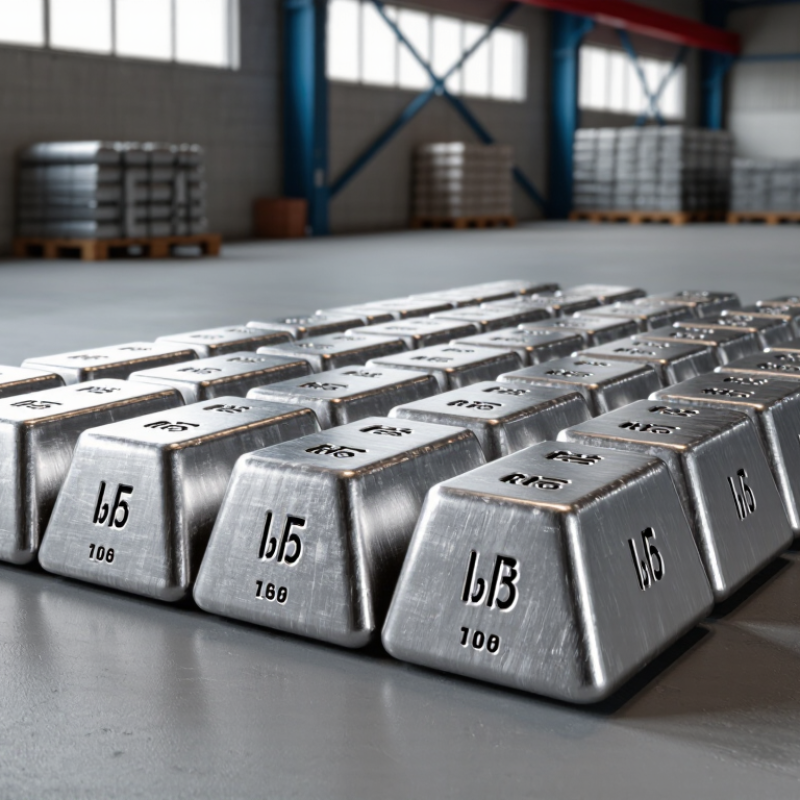
Nickel ingots are cast units of refined nickel, usually supplied for melting, alloying, plating, or chemical processing. Buyers should separate primary nickel from ferronickel and nickel pig iron. Their chemistry and intended use differ sharply. LME specifications commonly require at least 99.80% nickel for deliverable primary metal, while industrial grades may include nickel 200 or nickel 201. Nickel 201 contains lower carbon, making it more suitable for elevated-temperature processing. Trace elements matter. Sulfur, iron, copper, and carbon can affect corrosion resistance, weldability, and final alloy performance.
USGS Mineral Commodity Summaries 2024 estimated global mined nickel production at about 3.6 million metric tons in 2023. This figure describes mine output, not refined ingot supply. Data are not perfectly comparable. That distinction is easy to miss. Stainless steel remains the largest nickel-consuming sector, while batteries are increasing demand for high-purity nickel chemicals and metal. The International Energy Agency reported strong growth in battery material demand in its Global Critical Minerals Outlook 2024. Nickel ingots may also support electroplating lines, turbine alloys, heat-resistant equipment, and refinery components. In electroplating, a Nickel Anode dissolves gradually in the bath, replenishing metal ions on the workpiece. Buyers should request mill certificates, assay results, dimensions, packaging details, and traceability records. A clean surface helps inspection, but appearance alone proves little. A practical mistake is treating every bright ingot as equivalent. Grade selection should follow the furnace recipe, corrosion environment, and required mechanical performance.
2026 Best Nickel Ingot Suppliers for Global Buyers?
Choosing a nickel ingot supplier requires more than comparing prices. Start with purity, grade, dimensions, and production consistency. Request recent certificates of analysis for each batch. Check whether the laboratory is independent and properly accredited. A reliable supplier should explain nickel origin, refining steps, and traceability records clearly. Ask for sample ingots before signing a large contract. Examine their surface quality, weight accuracy, markings, and protective packaging. A polished website proves little.
Tips: Compare at least three suppliers using the same checklist. Confirm monthly capacity, lead times, minimum order quantities, and shipment terms. Review how they handle delayed cargo, rejected material, and quality disputes. Verify export documentation and compliance with destination-country requirements. Inconsistent communication can signal deeper operational problems. Still, fast replies do not guarantee stable production.
Experienced buyers also assess financial stability, inspection access, and supply continuity. Request references from comparable industrial customers, without relying only on testimonials. A supplier should provide clear payment terms and realistic delivery dates. Very low quotations deserve careful review. They may hide weaker grades, uncertain origin, or extra logistics costs. No checklist is perfect. Recheck assumptions when market conditions change. Supplier evaluation should remain practical, documented, and evidence-based.
| Evaluation dimension | What buyers should verify | Useful evidence or benchmark | Buyer check |
|---|---|---|---|
| Nickel content and chemistry | Confirm the guaranteed nickel percentage and limits for cobalt, iron, copper, sulfur, carbon, and other relevant impurities. | A signed specification and lot-specific certificate of analysis (CoA). Nickel content and impurity limits should be stated explicitly; there is no single composition specification that applies to every nickel ingot. | Compare the CoA with the purchase contract and your process limits. |
| Product form and dimensions | Check ingot shape, dimensions, unit weight, surface condition, and whether the material is suitable for charging, remelting, or further processing. | Approved drawings or dimensional tolerances, packing details, and representative product photographs or samples. | Request a sample or pre-shipment inspection when dimensions are process-critical. |
| Independent testing | Determine whether chemistry and mass can be independently checked before shipment or at destination. | A testing laboratory accredited to ISO/IEC 17025 for the relevant test methods and analytes. Accreditation should be verified for the specific scope, not assumed from the laboratory name alone. | Agree on sampling, test methods, retained samples, and dispute procedures in writing. |
| Quality management | Assess whether production and shipment controls are documented and consistently applied. | A current ISO 9001 certificate can indicate a quality-management system; it does not by itself certify nickel purity or guarantee a particular shipment’s conformity. | Verify the certificate’s validity, issuing certification body, and covered site or scope. |
| Traceability and origin | Establish the production source, batch identity, and chain of custody through shipment documents. | Batch or heat numbers linked across the CoA, packing list, invoice, and shipping documents; origin documentation appropriate to the destination market. | Check that the documents identify the same product lot and declared origin. |
| Responsible sourcing | Review the supplier’s upstream due-diligence process, environmental controls, and disclosure of material risks. | Documented supply-chain policies, risk assessments, and audit or assurance records. The OECD Due Diligence Guidance provides a recognized framework; a policy statement alone is not proof of performance. | Request evidence relevant to the production source and the buyer’s reporting requirements. |
| Environmental and safety systems | Check how the production site manages environmental impacts and occupational health and safety. | ISO 14001 and ISO 45001 are internationally used management-system standards. Certification is evidence of a management system within its stated scope, not a guarantee of zero environmental or safety incidents. | Confirm site coverage, current validity, and availability of relevant performance information. |
| Regulatory documentation | Identify import, chemical, customs, and product-documentation requirements for the destination and intended use. | For EU imports, assess applicable REACH obligations and obtain relevant substance and safety documentation where required. Requirements depend on the substance, role in the supply chain, volume, and use. | Confirm obligations with the importer or regulatory adviser before placing an order. |
| Capacity and delivery reliability | Validate available quantity, production lead time, shipment frequency, and ability to meet the required delivery window. | Written production and shipment schedule, allocation confirmation, and references or performance records that can be independently checked. | Separate confirmed stock from planned production in the quotation. |
| Packaging and transport | Check packaging strength, moisture and contamination protection, load security, and handling suitability for the route. | Packing specification, net and gross weights, pallet or container loading plan, and photographs before dispatch. | Specify acceptable packaging and responsibility for damage or shortage. |
| Commercial terms and price transparency | Understand the pricing basis, currency, payment milestones, premiums, freight, insurance, and validity period. | A written quotation showing the price formula and named delivery place. Incoterms® 2020 rules allocate specified delivery obligations, costs, and risks; the chosen rule and place should be stated precisely. | Compare like-for-like quotations on the same specification, shipment size, and delivery basis. |
| Payment and counterparty checks | Assess the contracting entity, payment beneficiary, credit terms, and safeguards for advance payments. | Verified corporate and banking details, a signed contract, and payment protections appropriate to the transaction, such as a letter of credit when commercially suitable. | Ensure the beneficiary matches the contracted party or is formally documented. |
Note: This is a supplier-evaluation checklist, not a ranked list or endorsement. Confirm product specifications, certifications, regulatory obligations, and delivery terms directly for each transaction.
Nickel ingot suppliers are concentrated in regions with strong mining, refining, and export infrastructure. Indonesia has expanded its role through abundant nickel resources and growing processing capacity. Buyers may find competitive availability there, but should check ingot chemistry, production consistency, and export schedules. A low quoted price is not the whole story.
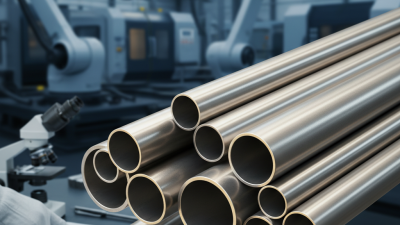
China remains a major refining and trading hub, supported by extensive industrial networks and established shipping routes. Australia and Canada offer resource-backed supply, while European producers often serve buyers seeking regional logistics and detailed quality documentation. Each market has trade-offs. Shipping distance matters. So does traceability. Request recent assay reports, confirm packaging and moisture protection, and compare delivery terms before placing an order. Nickel ingots may feed stainless steel, alloys, and production chains involving Nickel Pipes, but the required grade can differ sharply. Supplier claims should be checked against independent inspection where practical. Even reliable regions can face disruptions, and I would not treat any supplier map as permanent.
For 2026 nickel ingot sourcing, quality begins with a clear chemical specification. The USGS Mineral Commodity Summaries 2025 estimates 2024 global mine production at about 3.7 million metric tons. Indonesia supplied roughly 2.2 million tons, making origin and processing history important purchasing details. High output does not automatically mean consistent ingot quality.
Ask suppliers for batch-specific certificates, not generic product sheets. Independent laboratories should test nickel content, cobalt, iron, copper, sulfur, carbon, and other trace elements using ICP-OES or validated XRF methods. Combustion analysis can measure carbon and sulfur more accurately. Inspectors should also record ingot weight, dimensions, surface cracks, inclusions, and visible oxidation. Small sampling errors matter.
Certification supports trust, but it is not proof by itself. ISO 9001 demonstrates controlled quality procedures, while ISO/IEC 17025 accreditation strengthens laboratory competence. Request EN 10204 3.1 inspection documents when traceability is required. The certificate should connect the heat number, production date, test method, and laboratory report. The International Nickel Study Group regularly highlights supply growth and market volatility, so buyers should verify every shipment rather than rely on historical performance. A gap remains: many procurement teams check chemical results but overlook moisture, packaging damage, and mixed-lot loading. Those details can quietly increase refining losses.
2026 Best Nickel Ingot Suppliers for Global Buyers?
Pricing depends on more than the daily nickel benchmark. Compare the quoted metal basis, purity, dimensions, packaging, freight, insurance, and payment terms. The International Nickel Study Group’s October 2024 outlook estimated 2025 primary nickel use at about 3.56 million metric tonnes. That scale matters: supply shifts can affect benchmarks, but they do not set every ingot quote. Ask suppliers to date their offers and state how long prices remain valid. A low quote can hide costly freight or testing.
Minimum orders vary by producer, ingot size, and shipment method; there is no universal minimum. Request the minimum order quantity, sample policy, lead time, and packing list before paying a deposit. For cross-border shipments, confirm agreed delivery terms, product specifications, certificates of analysis, and customs documents with your broker. Nickel Alloy buyers should also verify that the ingot grade fits their intended melt. One comparison can still miss a detail. Recheck the unit basis: metric tonnes and pounds are easy to confuse.
Tips: Compare total landed cost, not just price per tonne. Ask for a recent assay and written confirmation of origin. Keep a small buffer for port delays; schedules look precise on paper, but real shipments can slip.
For global buyers, nickel ingot procurement in 2026 will depend on logistics, not price alone. A reliable supplier should provide production records, assay reports, and export documentation. Ask for batch-level traceability. The certificate must match the ingots inside the container. Small discrepancies create expensive delays. Experienced buyers also check loading ports, transit routes, and backup carriers before signing contracts.
Packaging protects product value during long ocean journeys. Ingot bundles should use strong strapping and moisture-resistant wrapping. Wooden supports may require treatment certificates in certain markets. Containers should be inspected for leaks, salt residue, and damaged floors. Photographing the cargo before sealing creates useful evidence. Desiccants help, but they cannot fix wet loading conditions. This detail is often underestimated.
Supply chain risk management needs clear response triggers. Buyers can request shipment milestones, inventory updates, and immediate notices for route disruptions. Split deliveries may reduce exposure when one vessel or port fails. A second qualified source is valuable, even at a higher price. Payment terms should connect to inspection results and shipping documents. No plan removes every risk. Weather, congestion, and regulatory checks can disrupt careful schedules. Review each shipment afterward, including mistakes that seemed minor at the time.
Nickel Mine Production by Country (2023)
Indonesia accounted for the largest share of estimated global mine production. Production concentration is one factor global buyers may consider when assessing sourcing and supply-chain risk; mine output does not indicate supplier capacity, shipping performance, or product availability. Source: U.S. Geological Survey, Mineral Commodity Summaries 2024 (2023 estimates).
Selecting a nickel ingot supplier in 2026 starts with your actual production needs. Define the required grade, dimensions, tolerances, and monthly volume before requesting quotes. Ask for a recent certificate of analysis and check that its heat or batch number matches the shipment documents. Small details matter.
A reliable supplier should explain how it controls chemistry and handles quality checks. Request traceability records, clear packaging specifications, and photographs of ingots before dispatch. If the material will be melted or processed, confirm that the stated Nickel Metal grade suits your process with your technical team. A sample can help, though one sample cannot prove every future batch will be consistent.
Compare more than the unit price. Review lead times, minimum order quantities, shipping arrangements, and the process for reporting damaged or out-of-spec material. Ask how the supplier manages delays and whether it can provide realistic updates. Vague answers are a warning sign. I would also verify documents independently when possible; a polished certificate alone is not enough. Even careful checks have limits, and supplier performance should be reviewed over time.
Nickel ingots are melted, alloyed, plated, or processed chemically. They support stainless steel, turbine parts, heat-resistant equipment, and refinery components. Electroplating baths use nickel anodes to replenish metal ions.
Primary nickel usually has much higher nickel content. Ferronickel and nickel pig iron contain more iron and serve different furnace purposes. Do not treat them as interchangeable materials.
Industrial buyers may select nickel 200 or nickel 201. Nickel 201 has lower carbon content and suits some elevated-temperature applications. The correct grade depends on the furnace recipe and service conditions.
Sulfur, iron, copper, and carbon can change corrosion resistance and weldability. They may also influence the final alloy’s mechanical behavior. Small chemistry changes matter.
Request batch-specific assay results, mill certificates, dimensions, weights, and packaging details. Traceability records should connect the heat number with the test report. Generic product sheets are not enough.
Testing should measure nickel, cobalt, iron, copper, sulfur, carbon, and other relevant elements. Laboratories may use validated X-ray or plasma-based methods. Combustion analysis can improve carbon and sulfur measurement.
No. Appearance can mislead. Inspectors should check cracks, inclusions, oxidation, weight, and dimensions. A shiny ingot may still have unsuitable chemistry or weak traceability.
Use strong strapping, moisture-resistant wrapping, and suitable container supports. Inspect containers for leaks, salt residue, and damaged floors. Photograph the cargo before sealing. No plan is perfect. Split deliveries and a qualified backup supplier can reduce disruption.
This guide explains what a Nickel Ingot is, how common grades differ, and why the material is used across industries such as manufacturing, energy, and engineering. It outlines the factors global buyers can use to assess suppliers, including product consistency, production capacity, communication, delivery reliability, and experience serving international markets. It also compares the strengths of major supplier regions and describes how buyers can verify quality through specifications, testing methods, and relevant certifications.
The article further reviews pricing influences, minimum order quantities, payment and trade arrangements, and practical shipping considerations. It highlights the importance of suitable packaging, clear documentation, and contingency planning to reduce supply-chain risks. By weighing technical requirements, total landed cost, supplier performance, and long-term availability, buyers can make a more informed choice and select a Nickel Ingot supplier that fits their needs in 2026.