Leave Your Message
So, you're wondering what makes for the best electroplating equipment supplier in China? Honestly, picking the right one isn’t just about scoping out the lowest prices online. The real deal is about more than that — think process stability, engineering know-how, and long-term support. A dependable supplier should really get what you need — your plating chemistry, how much you produce, the size of your workpieces, and the quality of surface finish you're aiming for. They should also be able to provide clear drawings, load calculations, guidance on installation, and maintenance history.
I remember Dr. Abner Brenner, a respected researcher in electrodeposition, saying, “The quality of an electrodeposit depends upon the conditions under which it’s produced.” That’s still so true today. Things like a stable rectifier, precise temperature control, good filtration, and proper ventilation all play a big role in getting great results. When you visit a factory, it’s a good idea to check out the busbars, tank linings, pump seals, control cabinets, and even how easily you can get spare parts. Sometimes, it’s those small details that really tell you a lot about a supplier.
Big players like Jiangsu Huaxin Environmental Protection Equipment Co., Ltd., or companies that meet Atotech-level standards, are ones I’d trust for testing before you buy. Don’t be shy about asking for sample plating, energy consumption data, coating thickness results, and references from similar factories. And communication’s key — if they take forever to reply, that could end up costing you a lot once everything’s installed.
Honestly, the cheapest option isn’t always the best one in the long run. Sounds obvious, right? But surprisingly, many folks overlook the importance of training and after-sales support. And watch out for overly ambitious claims like 'zero maintenance' or guaranteed results for every single metal — nobody can control every variable in the process. A good, trustworthy partner will be honest about what limits there are, share clear documentation, and work with you to improve the system over time.
This article digs into those practical differences and highlights what really makes a supplier dependable when it comes to China’s electroplating equipment. It’s all about finding someone who’s experienced, transparent, and committed to supporting your success.
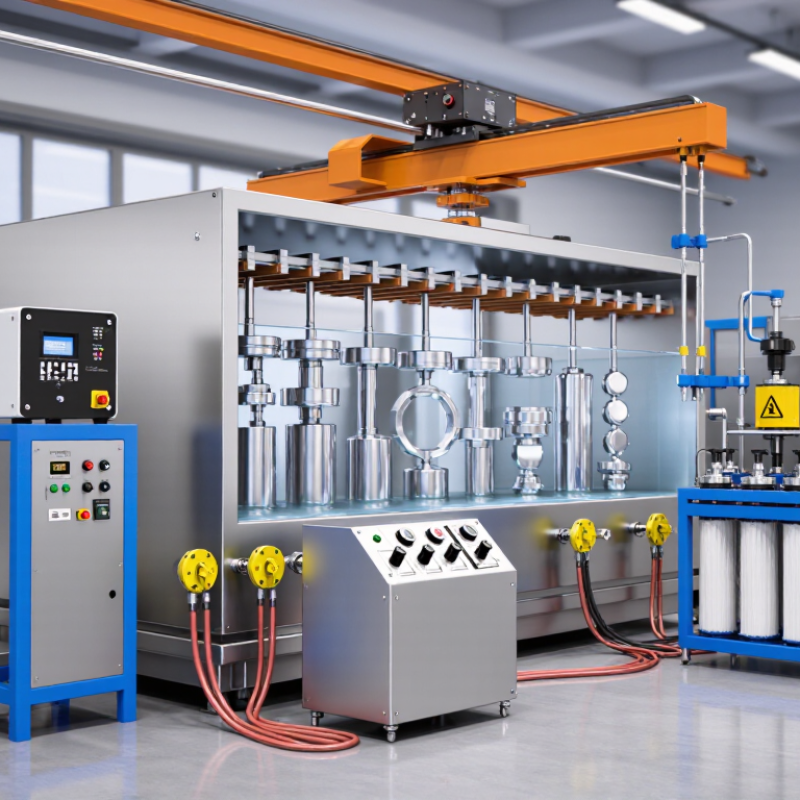
A leading China electroplating equipment supplier is defined by process control, not factory size. Experience appears in the details: stable rectifiers, uniform anode placement, clean piping, and accessible maintenance points. Small details matter.
Grand View Research estimates the global electroplating market at roughly USD 17 billion in 2023. This growth increases pressure on suppliers to deliver repeatable quality, not attractive brochures. A capable supplier should provide current-density calculations, bath-temperature controls, production trials, and measurable coating-thickness records. According to the International Energy Agency’s Energy Efficiency 2023 report, industry consumed about 37% of global final energy in 2022. Therefore, efficient rectifiers, heat recovery, and standby controls deserve serious evaluation. A lower purchase price may hide higher operating costs.
Reliability also depends on documentation. Look for factory acceptance tests, electrical schematics, spare-parts lists, calibration records, and clear response times. ISO 9001 certification can support traceability, but it cannot replace technical evidence. Ask for test data from similar workloads, including rack loading, cycle time, and defect rates. Wastewater-management integration should follow applicable Chinese and international requirements. Do not accept vague promises. I would inspect one working installation before signing. No supplier is perfect, and even strong systems may need adjustment after installation. That uncomfortable phase often reveals the supplier’s real engineering discipline.
| Evaluation Dimension | Industry-Based Reference Data | What a Leading Supplier Should Provide | Verification Evidence |
|---|---|---|---|
| Rectifier Performance | Stable direct-current output with adjustable voltage and current; common industrial systems use ripple control to improve coating uniformity. | Clearly stated voltage/current range, output accuracy, cooling method, overload protection, and measurable ripple performance. | Factory test report, calibration records, electrical schematic, and witnessed load testing. |
| Process Temperature Control | Many electroplating baths operate within approximately 20–70°C, depending on the chemistry and process. | Temperature controller with sensor feedback, alarm limits, over-temperature protection, and documented control accuracy. | Controller specifications, temperature-mapping results, alarm test records, and operating instructions. |
| Tank Construction | Polypropylene, PVC, PVDF, steel-lined tanks, and fiberglass-reinforced plastic are selected according to bath chemistry and temperature. | Material compatibility review, suitable wall thickness, reinforced structure, leak prevention, and serviceable heating or cooling components. | Material certificates, tank drawings, weld inspection records, hydrostatic or leak-test report. |
| Automation and Monitoring | Industrial control systems commonly monitor current, voltage, temperature, liquid level, filtration status, and operating time. | Recipe management, data logging, access control, alarm history, manual override, and clear human-machine interface design. | Control-system functional test, software backup, input/output list, user manual, and sample production records. |
| Filtration and Bath Circulation | Continuous filtration and controlled circulation help reduce suspended particles and improve deposit consistency. | Pump flow rate, filter capacity, compatible filter media, chemical-resistant piping, and accessible maintenance points should be specified. | Pump curve, filtration-layout drawing, spare-parts list, flow test, and maintenance schedule. |
| Ventilation and Environmental Control | Electroplating operations may generate acidic, alkaline, solvent, or metal-containing vapors that require localized extraction and treatment. | Capture hood design, airflow calculations, corrosion-resistant ducting, scrubber compatibility, and safe discharge planning. | Ventilation calculation, airflow measurement, treatment-system specification, and applicable local compliance documents. |
| Electrical and Machine Safety | Industrial machinery should address protective bonding, emergency stopping, guarding, isolation, and control-circuit safety. | Risk assessment, emergency-stop circuit, electrical protection, cabinet labeling, lockout provisions, and safe access for maintenance. | Electrical test report, risk-assessment file, wiring diagram, safety-circuit test, and conformity documentation. |
| Compliance Documentation | ISO 9001 relates to quality-management systems; ISO 14001 relates to environmental-management systems; IEC 60204-1 addresses electrical equipment of machinery. | Valid certificates where applicable, traceable technical files, material declarations, and destination-market compliance support. | Certificate scope and validity check, declaration documents, technical construction file, and audit records. |
| Production Quality Control | Critical checks include dimensional inspection, weld quality, electrical safety, leak testing, control-system testing, and final functional testing. | Documented inspection and test plan with defined acceptance criteria at incoming, in-process, and final stages. | Inspection checklist, nonconformance procedure, corrective-action records, and final acceptance-test report. |
| Customization Capability | Line layout, tank dimensions, workpiece size, number of process stages, loading method, and chemical requirements vary by application. | Process review, capacity calculation, 2D or 3D layout, utility list, cycle-time estimate, and change-control procedure. | Approved design drawings, process-flow diagram, design-review minutes, and signed technical specification. |
| Installation and Commissioning | A complete installation normally requires mechanical setup, electrical connection, piping, ventilation integration, calibration, and process validation. | Defined commissioning scope, installation drawings, operator training, startup checklist, and performance-acceptance criteria. | Site-acceptance test, training attendance records, commissioning report, and punch-list closure. |
| After-Sales Support | Electroplating lines require periodic maintenance for pumps, heaters, sensors, filters, rectifiers, ventilation systems, and control components. | Spare-parts availability, troubleshooting guidance, remote support, service response process, and preventive-maintenance documentation. | Service-level terms, recommended spare-parts list, maintenance manual, response workflow, and warranty conditions. |
| Total Cost of Ownership | Operating cost is influenced by electricity, heating or cooling demand, water consumption, filtration, ventilation, chemicals, labor, maintenance, and wastewater treatment. | Transparent quotation separating equipment, installation, utilities, consumables, spare parts, training, and long-term operating assumptions. | Itemized commercial offer, utility-consumption estimate, maintenance-cost forecast, warranty terms, and lifecycle-cost comparison. |
A leading electroplating equipment supplier is best identified through verifiable technical performance, documented quality controls, compliance evidence, process knowledge, commissioning capability, and reliable lifecycle support rather than price alone.
Inspect samples made from similar metals and part shapes. Measure coating thickness at edges, corners, and recessed areas. Uneven readings may indicate weak current distribution or poor process control. Request adhesion tests and repeated production results. One successful sample is not enough.
Check whether the rectifier maintains stable current during long operating cycles. Review temperature sensors, filtration, agitation, heating, and emergency protection. Ask to see operating screens and maintenance records. Practical technology matters more than impressive demonstrations. Looks can mislead.
Compare installed equipment with the promised monthly output. Ask how many engineers handle design, assembly, testing, and service. Request a realistic delivery schedule and factory acceptance testing plan. Production claims should match physical resources. Numbers need evidence.
Define the coating metal, production volume, tank dimensions, and current density. Include temperature ranges and acceptable coating-thickness tolerances. Provide drawings, chemical specifications, and target production rates. Incomplete details can cause expensive revisions later. I may overlook something.
Look for clean tanks, labeled pipelines, organized wiring, and clear inspection procedures. Check whether critical components are produced internally or outsourced. Ask who controls software, pumps, wiring, and replacement parts. Small details can reveal larger reliability problems. Do not trust polished presentations alone.
Compare equipment prices with energy use, chemicals, maintenance, downtime, and wastewater treatment. Rectifier efficiency and solution heating can strongly affect operating expenses. Request a spare-parts list and expected maintenance intervals. The cheapest quotation may become expensive later. That risk is easy to miss.
Clarify installation responsibilities, commissioning dates, training, and software access. Request traceable inspection records and an operator-training plan. Confirm response procedures for breakdowns and unavailable spare parts. Unclear responsibility often causes costly delays. Write everything down.
Send a detailed technical question before signing an agreement. Measure whether the reply is precise, practical, and complete. Fast replies are useful, but precise replies are better. A reliable supplier may admit design limits and suggest revisions. That is useful evidence.
Choosing the best China Electroplating Equipment supplier requires more than comparing prices. A leading supplier should offer reliable production capabilities, advanced engineering, stable quality control, and a broad range of solutions, including plating lines, rectifiers, tanks, filtration systems, heating units, drying equipment, and automation controls. Buyers should evaluate materials, operating efficiency, safety design, maintenance requirements, testing procedures, and the supplier’s ability to support customized configurations for different production volumes and workpiece requirements.
Certifications, documented compliance with applicable safety and environmental standards, and transparent quality records are important indicators of professionalism. It is also essential to compare total costs, delivery schedules, installation services, spare-parts availability, training, warranties, and long-term technical support rather than focusing only on the initial quotation. The best supplier is one that understands the customer’s plating process, communicates clearly, provides dependable after-sales assistance, and delivers scalable Electroplating Equipment that performs consistently and safely.