Leave Your Message
Choosing the best Titanium Hanger Bar for buyers around the world isn't just about comparing prices. Honestly, the right pick depends on a bunch of factors like load capacity, diameter, alloy type, surface finish, and where you'll actually use it. I mean, a bar holding up clothes in a retail shop faces totally different conditions than one used in a marine setting or industrial storage—so, yeah, one size definitely doesn’t fit all.
Dr. David H. Alexander, who’s quite the independent expert on titanium materials, once said, “A trustworthy titanium part starts with verified materials, not just slick marketing pitch.” And honestly, that’s the kind of advice we should pay attention to. Buyers really need to ask for things like mill certificates, chemical reports, inspection records, and traceability details. Sure, companies like Baoji Titanium Valley New Material Co., Ltd., might offer Grade 2 or Grade 5 titanium, but just knowing the grade isn't enough. Things like welding quality, straightness, hole precision, and how smooth the edges are matter just as much.
And a super strong bar isn’t always the best one either. Sometimes, it’s about finding that sweet spot where strength meets the specific needs of your project.
If you’re purchasing globally, it’s worth comparing things like how much experience the manufacturer has, their testing methods, how well they pack their products (especially for long overseas trips), lead times, and how reliable their communication is. Packaging should protect the bar from scratches, bending, or moisture—none of us want surprises on arrival. Also, clear drawings and confirming both metric and imperial sizes before production can save a lot of headaches down the line.
Here’s a tough pill to swallow—some buyers only focus on titanium’s impressive corrosion resistance and overlook whether the bar can handle actual installation loads. That’s a mistake. Even a lightweight bar might need sturdier brackets, different spacing, or a revamped mounting plan to work properly. This article aims to help you evaluate Titanium Hanger Bars with real-world evidence, technical insights, and practical buying tips—not to push any particular supplier. The goal? To steer you towards safer, smarter decisions on a global scale.
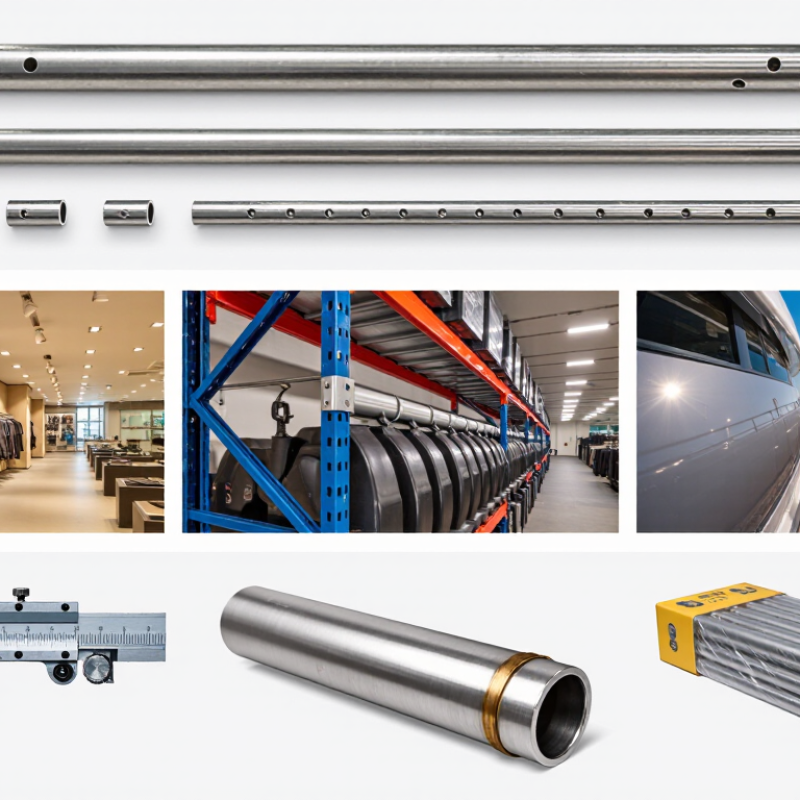
A titanium hanger bar is a conductive support used to hold parts during electroplating and related surface-treatment processes. It carries electrical current while keeping workpieces positioned inside a processing tank. Titanium resists corrosion from many demanding chemical environments. Its low weight also makes daily handling easier. Fit matters. A poorly sized bar may bend, vibrate, or leave uneven contact marks.
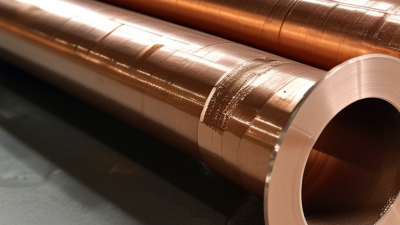
A Titanium Clad Copper Hanger Bar combines a copper core with a titanium outer layer. Copper provides strong electrical conductivity, while titanium protects the surface from chemical attack. This structure can suit plating lines that need stable current transfer and repeated cleaning. In workshop use, contact points should remain bright and firm, not loose or heavily oxidized. I have seen apparently perfect bars perform poorly because their threads, hooks, or contact areas were overlooked.
Common applications include printed circuit production, metal finishing, laboratory fixtures, and industrial coating systems. Global buyers should check diameter, length, allowable load, hole spacing, and operating temperature. Material certificates and dimensional inspection records add useful traceability. The best choice depends on tank design, current requirements, and handling frequency. More titanium is not automatically better. Some specifications need closer review. A supplier should explain resistance data, joining methods, surface finish, and replacement-part compatibility before production begins. Packaging also matters, because bent ends can create expensive alignment problems.
Titanium hanger bars are load-supporting components used to suspend, position, or transport parts in corrosive, high-temperature, or contamination-sensitive environments. The best choice depends on grade, working temperature, load, geometry, and surface requirements.
| Titanium Grade | Typical Nominal Composition | Approx. Density | Key Characteristics | Common Hanger Bar Applications | Recommended Buyer Profile |
|---|---|---|---|---|---|
| Grade 1 | Commercially pure titanium; very low alloy content | About 4.51 g/cm³ | Excellent corrosion resistance, high ductility, and relatively low strength among commercially pure grades | Light-duty racks, chemical handling fixtures, laboratory equipment, and applications requiring maximum formability | Buyers prioritizing corrosion resistance, bending performance, and easy fabrication |
| Grade 2 | Commercially pure titanium; balanced oxygen content | About 4.51 g/cm³ | Strong corrosion resistance with a useful balance of strength, weldability, availability, and cost | Electroplating racks, anodizing fixtures, heat-exchanger supports, marine hardware, and general industrial hanger bars | Best general-purpose option for many global industrial buyers |
| Grade 3 | Commercially pure titanium with higher strength than Grades 1 and 2 | About 4.51 g/cm³ | Higher tensile and yield strength than lower commercial-purity grades while retaining strong corrosion resistance | Medium-load process racks, chemical-processing fixtures, and supports exposed to demanding service conditions | Buyers needing more load capacity without moving to an alloyed grade |
| Grade 4 | Commercially pure titanium with the highest strength in the CP grade family | About 4.51 g/cm³ | High strength, good corrosion resistance, and lower ductility than Grades 1–3 | Heavy-duty hanger bars, structural supports, and fixtures carrying higher static loads | Buyers focused on load-bearing capability and long service life |
| Grade 5 | Approximately 90% titanium, 6% aluminum, and 4% vanadium | About 4.43 g/cm³ | High strength-to-weight ratio, strong fatigue performance, and good elevated-temperature capability; more difficult to form and machine | Aerospace fixtures, high-strength suspension components, specialized heat-treatment supports, and weight-sensitive equipment | Buyers requiring high mechanical strength rather than maximum ease of fabrication |
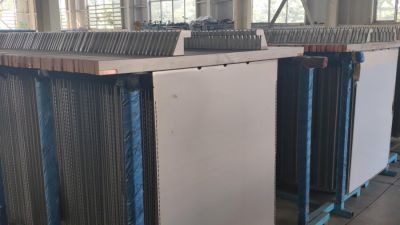
Premium titanium cathodes from China are manufactured for demanding hydrometallurgical and electrolytic applications, where corrosion resistance, dimensional stability, and reliable conductivity are essential. The cathodes combine titanium-clad copper hanger bars with industrially pure titanium plates, offering a durable solution for electrolysis equipment. Available materials include titanium grades TA1, TA2, Gr1, and Gr2, together with C11000 copper for the hanger bars. Each component is produced according to customer drawings and technical requirements, supporting customized designs for different cell configurations.
Typical titanium-clad copper hanger bar dimensions include 54 × 29 × 1470 mm, 41.3 × 20 × 1270 mm, and 50 × 20 × 1247 mm. Matching titanium plates may be supplied in sizes such as 1149 × 950 × 3.0 mm, 1107 × 980 × 3.0 mm, and 1489 × 838 × 3.25 mm. The hanger bars conform to GB/T 12769-2015, while the titanium plates meet GB/T 3621-2022 and ASTM B265 requirements. Factory-direct production enables close control over material selection, fabrication accuracy, and inspection, providing dependable titanium cathode components for copper, nickel, zinc, and other electrolytic metal recovery processes.
It is a conductive support used inside processing tanks. It holds parts in position and carries electrical current. Fit matters.
Titanium resists corrosion in demanding chemical environments. It is also relatively lightweight for daily handling. However, “titanium” alone is not enough.
It combines a copper core with a titanium outer layer. Copper supports efficient current transfer. Titanium helps protect the surface from chemical attack.
Common uses include printed circuit production and metal finishing. They also serve laboratory fixtures and industrial coating systems. The exact design depends on the process.
Check the diameter, length, allowable load, and hole spacing. Confirm operating temperature and available tank clearance. Leave room for hooks and moving parts.
An unsuitable bar may bend, vibrate, or create uneven contact marks. Bent ends can disturb alignment during handling. Small errors become expensive.
Look for a smooth, even finish without sharp edges. Welds should not show pits, cracks, or obvious gaps. Threads, hooks, and contact areas need careful inspection.
Request material certificates, dimensional tolerances, and test data. Resistance information and joining methods may also matter. Replacement compatibility deserves attention.
No. The bar should match the real load, space, climate, and maintenance routine. Compare rated capacity with actual use. Advertised figures may assume ideal support.
A sample can reveal rough welds, poor fit, or weak contact points. Photos often hide these problems. I would not rely on photos alone.
A Titanium Hanger Bar is a specialized component used to support, suspend, or position equipment in demanding industrial, marine, architectural, and manufacturing applications. Its value comes from titanium’s low weight, high strength-to-weight ratio, corrosion resistance, and ability to perform reliably in harsh environments. When selecting one, buyers should consider the required titanium grade, dimensions, surface finish, connection design, working temperature, and expected load. Understanding the difference between static and dynamic loads is also essential for safe and efficient use.
Global buyers should evaluate suppliers through documented manufacturing procedures, material traceability, dimensional inspections, load testing, and corrosion or surface-quality checks. Relevant quality certifications, clear technical drawings, realistic lead times, packaging standards, and responsive communication can help reduce purchasing risks. Pricing should be compared based on total value rather than unit cost alone, including customization, testing, shipping, and after-sales support. The best Titanium Hanger Bar is the one that matches the application’s performance requirements while offering dependable quality, verified documentation, predictable delivery, and long-term service life.