Leave Your Message
0%

Buying a Suspension Bar from overseas isn’t just a matter of comparing prices. It looks like a short steel link, sure. But its dimensions, metallurgy, bushings, and surface finish? Those can make a real difference to vehicle safety and how long the part lasts. Global buyers need evidence—not just confident promises.

Race Tech founder Paul Thede had a principle worth borrowing: “Match the suspension to the rider, machine, and terrain.” The same idea works in procurement. A Suspension Bar should fit the vehicle platform, the expected load, road conditions, and your replacement schedule. So ask to see drawings, material certificates, tensile data, fatigue testing, corrosion protection, and batch traceability. Practical proof matters. A shiny catalog? Not enough.

There’s a guide called “10 Suspension Bar Buying Tips for Global Buyers” that walks through the decisions that matter before you pay. It covers supplier experience, dimensional tolerance, rubber or polyurethane bushing quality, packaging, inspection procedures, minimum order quantities, and shipping terms. It also shows how to compare manufacturers—like Orion Suspension Components and other qualified suppliers—without getting swayed by marketing talk alone.

Small details get expensive fast when you’re buying overseas. A one-millimeter mismatch can hold up installation. Weak packaging can damage threads in transit. And an unclear warranty? That can turn into awkward conversations across time zones. Not every checklist survives the pressure of real purchasing. Worth admitting, honestly.

Reliable sourcing takes technical review, independent inspection when it makes sense, and clear communication about applicable standards. Buyers should confirm that products meet the legal and safety requirements of their markets. The right Suspension Bar isn’t just affordable. It’s documented, compatible, inspectable, and dependable—especially when the road gets rough.
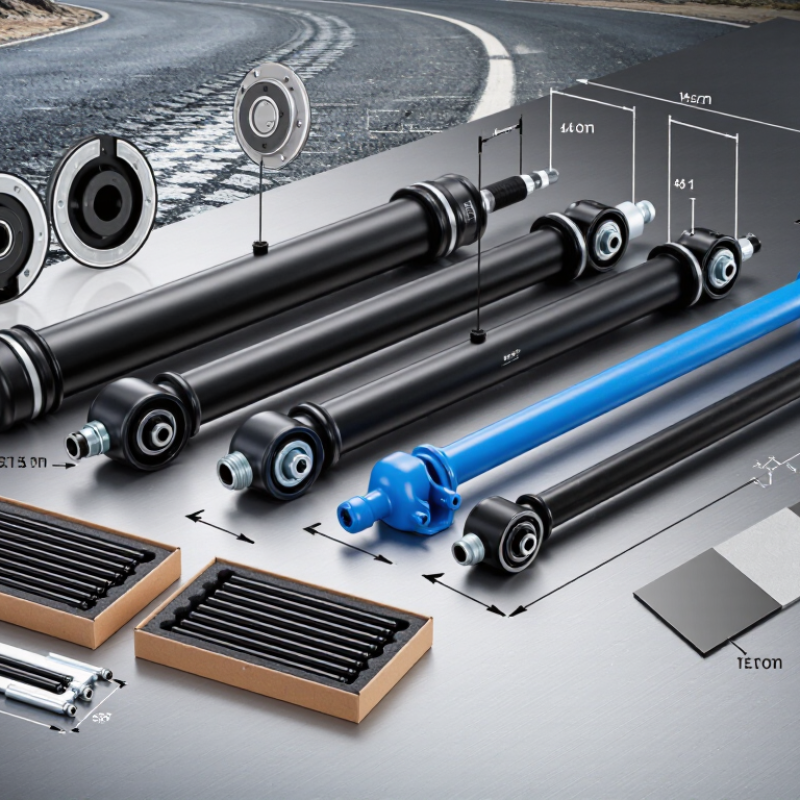
10 Suspension Bar Buying Tips for Global Buyers

Define Your Suspension Bar Requirements and Usage Conditions

Before requesting quotations, define what the suspension bar must do. State the working load, peak load, bar length, diameter, and connection method. Include the load direction and movement pattern. Static support differs from repeated vibration. I have seen buyers specify only a “strong bar,” then face poor fit during installation. That description is not enough. Measure the available space, including washers, joints, and tool clearance.

Describe the operating environment in practical terms. Note temperature changes, moisture, salt exposure, dust, chemicals, and outdoor storage. A Titanium Bar may suit applications requiring low weight and strong corrosion resistance, but its grade and surface condition still matter. Ask for material certificates, dimensional reports, and batch traceability. Check whether the supplier can control straightness and thread accuracy. Small errors become obvious when several bars must align.

Explain the service cycle clearly. Is the bar loaded once, every minute, or continuously? Record shock loads, vibration frequency, and expected service life. Request proof of testing that matches these conditions. Do not rely on a catalog load alone. It may reflect ideal installation, not your assembly. A realistic drawing helps. So does a sample inspection. Leave room for uncertainty; field conditions are rarely perfect. Recheck the design after installation, especially if noise, bending, or uneven contact appears.

Compare Suspension Bar Materials, Designs, and Load Ratings

Buying a suspension bar across borders requires more than checking its advertised strength. Material choice affects weight, corrosion resistance, fatigue life, and installation cost. Carbon steel offers strong load support and economical pricing, but it needs protective coating in humid environments. Stainless steel resists corrosion better. Aluminum is lighter, yet it may deform sooner under repeated stress. A Metal Bar Rod can suit heavy-duty assemblies when its alloy and heat treatment are documented.

Tip 1: Compare the design before comparing prices. A solid bar, tubular bar, and threaded bar behave differently under bending and vibration. Check diameter, end fittings, weld quality, and mounting clearance. Small geometry differences can change the real load path. Ask for dimensional drawings and material certificates. I have seen buyers overlook thread length, then modify the assembly locally. That shortcut was not ideal.

Tip 2: Read the load rating carefully. Confirm whether it describes static capacity, working load, or ultimate failure load. Review the safety factor, fatigue testing, and side-load limits. Dynamic equipment may experience impact forces several times higher than its normal weight. Request test conditions, temperature ranges, and corrosion results. Ratings can look precise. They are not always comparable. For global purchasing, verify packaging, inspection records, and applicable technical standards before approving the order.

10 Suspension Bar Buying Tips for Global Buyers

Compare suspension bar materials, designs, and load ratings before selecting a supplier. The chart uses representative minimum yield-strength values for common engineering materials; actual load capacity depends on bar dimensions, geometry, welds, fasteners, corrosion allowance, and the required safety factor.

Buyer checklist:
  1. Confirm the required working load limit and proof-test load.
  2. Compare carbon steel, alloy steel, stainless steel, and aluminum according to strength, weight, and corrosion conditions.
  3. Check whether the bar is straight, forged, eye-ended, adjustable, or welded.
  4. Review section diameter, wall thickness, thread engagement, and connection details.
  5. Ask for material certificates, dimensional tolerances, and traceability documents.
  6. Verify the design safety factor and applicable testing standard.
  7. Consider galvanizing, plating, or stainless construction for humid or marine environments.
  8. Check fatigue performance when the bar is exposed to repeated or shock loading.
  9. Confirm compatibility with brackets, pins, bushings, and mounting hardware.
  10. Compare total delivered cost, packaging, inspection, and replacement availability.

Yield strength is a material reference, not a certified suspension-bar rating. Request a product-specific working load limit from the manufacturer and do not exceed the lowest-rated component in the assembly.

Verify Supplier Qualifications, Manufacturing Standards, and Certifications

Global buyers should verify a suspension bar supplier before discussing price. Request the legal company name, factory address, production scope, and recent audit records. Check whether the certificate covers the actual manufacturing site. The ISO Survey 2023 recorded more than 1.26 million ISO 9001 certificates worldwide, but registration alone does not prove product quality. Scope matters.

Ask for documented control of melting, forging, heat treatment, machining, and final inspection. For a Nickel 200 Bar, confirm chemical composition, dimensions, tensile strength, and applicable ASTM or equivalent requirements. Require a heat number on the bar and matching traceability on the inspection certificate. EN 10204 3.1 documentation is useful when an independent inspection body validates test results. Do not accept a generic mill certificate.

Manufacturing standards should include calibrated equipment, operator training, nonconformance records, and a written corrective-action process. ISO 14001 and ISO 45001 can indicate environmental and workplace systems, while ISO 9001 supports process control. However, certificates may be expired, copied, or issued for another site. Inspect the accreditation details directly. A remote factory tour helps, though it is not enough. I have seen polished samples conceal inconsistent batch control. That mistake is costly. Ask for three recent production records, a sample inspection report, and independent laboratory testing before approval. Keep every revision in the purchase file.

Evaluate Customization Options, Product Compatibility, and Safety Features

Global buyers should examine customization before comparing prices. Ask whether the suspension bar can be produced in different lengths, diameters, finishes, and connection styles. A crowded training room may need a shorter bar, while industrial use may require thicker walls and reinforced joints. Confirm tolerances in writing. Small differences can affect installation.

Tip 1: Request a technical drawing before ordering. It should show dimensions, materials, hole positions, thread details, and allowable load. A Pure Nickel Bar may suit environments requiring strong corrosion resistance, but it may not match every clamp or support system. Check hardness, weight, and surface treatment too. Compatibility is often overlooked.

Tip 2: Test the complete setup, not only the bar. Inspect anchors, fasteners, handles, welds, and locking parts together. Ask for load-test records, material certificates, inspection procedures, and clear installation instructions. Safety depends on the weakest connection. Look closely there. Product documentation should be understandable for local installers and include maintenance intervals. Confirm whether regional safety requirements affect dimensions or testing. I have seen buyers approve attractive samples, then discover that the mounting holes do not align. That mistake is expensive, and avoidable. No checklist is perfect. Recheck it.

Assess Pricing, Minimum Orders, Lead Times, and Shipping Terms

When buying suspension bars globally, compare more than the quoted unit price. Request a detailed offer showing material grade, finish, testing, tooling, packaging, and payment terms. A low price may exclude corrosion protection or export packing. Check whether the quote is based on one sample or a repeatable production process.

Minimum order quantities can affect your cash flow. Ask whether the supplier accepts mixed lengths or staged deliveries. Confirm the cost of custom dimensions before approving drawings. Lead times need equal attention. Separate sample time, production time, inspection time, and transit time. Request a realistic schedule with shipping and holiday delays included. Keep a written approval record.

Shipping terms can change the final cost sharply. Compare EXW, FOB, CIF, and DDP only after identifying who handles insurance, customs clearance, duties, and destination charges. Ask for carton dimensions, gross weight, pallet details, and loading photos. These details help your forwarder calculate space accurately. I once focused on the factory price and underestimated port fees. That assumption failed. Build a landed-cost sheet for every supplier. Include currency movement and inspection costs. Payment security matters too. Use traceable documents and clearly defined acceptance criteria. Some buyers skip this step. They later argue over surface marks, hole positions, or late cartons. Specify tolerances, packaging strength, and remedies before production begins.

10 Suspension Bar Buying Tips for Global Buyers - Assess Pricing, Minimum Orders, Lead Times, and Shipping Terms

Buying Tip Key Dimension to Assess Typical Market Reference What Global Buyers Should Confirm Commercial Risk
1. Compare Like-for-Like Pricing Unit price, material grade, finish, machining, and included hardware Indicative export pricing for standard steel suspension bars is often about US$15–US$80 per piece, depending on size, design, material, and order volume. Request quotations using the same drawing, annual volume, packaging specification, inspection level, and Incoterm. Separate tooling, samples, testing, and freight charges from the unit price. A low quoted price may exclude machining, coating, export packing, or quality inspection.
2. Verify Material and Strength Steel grade, tensile strength, yield strength, hardness, and heat treatment Common automotive suspension components use alloy or carbon steels selected for fatigue resistance; heat-treatment requirements should be defined by the engineering drawing. Require a material certificate, heat-treatment record, hardness results, and traceability from raw material to finished batch. Do not approve a substitute grade without written engineering acceptance. Incorrect material or hardness can cause premature fatigue failure and product liability exposure.
3. Define the Exact Specification Dimensions, tolerances, hole locations, thread details, bend angle, and surface finish Critical mounting dimensions commonly require drawing-level tolerances rather than general catalogue tolerances. Issue a controlled drawing with revision number, inspection points, allowable deviations, coating thickness, and functional requirements. Approve a pre-production sample before mass production. Small dimensional deviations may create installation problems or uneven load distribution.
4. Check the Minimum Order Quantity MOQ by part number, tooling quantity, sample quantity, and mixed-model ordering For custom suspension bars, an initial MOQ of approximately 100–500 pieces per part number is common; standard items may be available in smaller quantities. Ask whether MOQ applies per design, finish, vehicle application, or shipment. Negotiate a pilot order or mixed-container arrangement for market testing. High MOQs increase inventory, working-capital requirements, and model-obsolescence risk.
5. Calculate Total Landed Cost Product price, tooling, packaging, freight, insurance, duty, customs fees, and inland delivery International freight and import charges can materially change the final cost, especially for heavy steel components with low container utilization. Build a landed-cost model using actual carton dimensions, gross weight, shipment volume, destination port, tariff classification, and applicable import taxes. The lowest factory price may not provide the lowest delivered cost.
6. Confirm Production Lead Time Sampling, tooling, production, inspection, and dispatch schedule Typical custom production may require 20–45 calendar days after drawing approval and deposit; tooling or new forging dies can add several weeks. Obtain separate dates for drawing approval, sample completion, mass production, final inspection, and cargo readiness. Include a delay-notification obligation in the purchase order. Unclear lead-time definitions can result in stockouts and missed customer delivery commitments.
7. Select Appropriate Shipping Terms Incoterm, transport mode, destination, insurance, and transfer of risk FOB is frequently used for port-based sea shipments, while FCA can suit containerized cargo and multimodal transport. DAP or DDP requires careful tax and customs review. State the named place and Incoterms® edition in the contract. Confirm who pays export clearance, main carriage, insurance, import clearance, duties, and final delivery. An incomplete Incoterm can create unexpected freight, customs, or demurrage charges.
8. Evaluate Packaging and Container Use Carton strength, rust protection, separators, palletization, and loading efficiency Heavy metal parts are commonly shipped in reinforced cartons or steel-frame pallets with protective separators and corrosion-control material. Approve a packaging drawing showing pieces per carton, carton weight, pallet dimensions, moisture protection, stacking limits, and shipping marks. Poor packaging can cause rust, deformation, carton collapse, and costly claims.
9. Establish Quality Inspection Rules Sampling plan, critical defects, dimensional checks, visual standards, and test reports AQL-based inspection is commonly used for appearance and dimensional checks, while safety-critical characteristics may require 100% verification or functional testing. Define acceptance criteria before production. Specify who performs the inspection, when it occurs, which records are supplied, and how nonconforming goods are corrected or replaced. Without written acceptance standards, resolving quality disputes becomes difficult.
10. Review Payment and Compliance Terms Payment schedule, warranty, documentation, testing, and regulatory obligations A common international structure is a deposit at order placement with the balance due after production or before shipment; exact terms depend on buyer risk and supplier history. Tie the balance payment to inspection or approved shipping documents. Confirm warranty duration, batch traceability, certificates of origin, restricted-substance requirements, and destination-market regulations. Unprotected payment terms and missing compliance documents can increase financial and import risk.

Note: Price, MOQ, and lead-time figures are indicative planning ranges for standard or customized steel suspension bars. Actual commercial terms vary according to design complexity, material, order volume, inspection requirements, destination, and shipping method.

Inspect Samples and Establish Quality Control Before Full Purchase

For global buyers, inspect a physical suspension bar sample before discussing a full purchase. Check its length, diameter, weight, and connection points against the approved drawing. Measure twice. Examine welds under bright light for cracks, pinholes, uneven beads, or sharp edges. Rotate the bar slowly and watch for bending or imbalance.

A reliable supplier should provide material certificates, coating details, inspection records, and a clearly defined load rating. Ask how the rating was tested, not only whether a certificate exists. Test the sample under controlled conditions, then inspect it again for permanent deformation. Check grip texture with dry and slightly damp hands. Small defects matter. Also review packaging by opening a packed sample. Corners need protection, and metal parts should not rub together during transport.

Before a full purchase, approve a written quality-control plan. It should state dimensional tolerances, surface requirements, testing frequency, carton markings, and rejection procedures. An independent inspection can verify production samples before shipment. Keep approved samples, drawings, photographs, and test results in one shared file. A clean sample can mislead. Production may vary when materials, operators, or tooling change. I still miss things sometimes, especially minor coating damage hidden near fittings. That is why a pilot order is often safer than an immediate large commitment. Use the pilot to compare every unit, record failures, and revise the acceptance criteria before scaling production.

FAQS

Which material is best for a suspension bar?

Carbon steel offers strong support and lower cost. It needs protective coating in humid areas. Stainless steel resists corrosion better. Aluminum weighs less but may deform under repeated stress. The choice depends on load, moisture, and fatigue.

How do bar designs affect performance?

Solid, tubular, and threaded bars behave differently under bending and vibration. Check diameter, wall thickness, thread length, end fittings, and mounting clearance. Small geometry changes can redirect the load. Ask for dimensional drawings before approval.

What should a load rating include?

Confirm whether the rating means static capacity, working load, or failure load. Review the safety factor, fatigue testing, and side-load limits. Dynamic equipment may create impact forces several times its normal weight. Ratings are not always comparable.

Which supplier documents should buyers request?

Request the legal company name, factory address, production scope, and recent audit records. Ask for material certificates, inspection reports, and production records. The certificate should cover the actual manufacturing site. A generic certificate is not enough.

How can material traceability be checked?

Require a heat number on each bar or batch. Match that number with the inspection certificate. Review chemical composition, dimensions, tensile strength, and heat-treatment records. Independent laboratory testing adds useful confirmation.

What customization details require written confirmation?

Confirm length, diameter, finish, connection style, hole positions, and thread details. State tolerances clearly. A few millimeters can prevent proper installation. Do not assume.

How can compatibility be verified before ordering?

Compare the bar with anchors, clamps, fasteners, handles, and support structures. Check mounting holes and connection dimensions. Review hardness, weight, surface treatment, and local installation limits. Test the complete setup, not only the bar.

What safety checks matter during final approval?

Inspect welds, locking parts, anchors, and fasteners together. Review allowable loads, maintenance intervals, and installation instructions. Safety depends on the weakest connection. Check the weakest joint.

Are certificates alone enough to approve a supplier?

No. Certificates can be expired, copied, or issued for another site. Verify accreditation details directly. A remote factory tour helps, but it cannot replace production records and independent checks. I would not rely on polished samples alone.

Conclusion

Buying a Suspension Bar for global use requires careful planning beyond comparing prices. Start by defining the intended application, installation environment, operating frequency, weight capacity, and expected safety margin. Then compare materials, structural designs, surface treatments, and load ratings to ensure the product can withstand actual working conditions. Buyers should also verify the supplier’s production capabilities, quality management processes, testing procedures, and relevant certifications. Compatibility with existing equipment, available customization, mounting dimensions, and built-in safety features should be confirmed before placing an order.

Commercial terms are equally important. Evaluate unit pricing, minimum order quantities, production lead times, packaging, shipping arrangements, and payment conditions together rather than separately. Request representative samples and inspect dimensions, finish, strength, and performance before committing to a large purchase. Establish clear quality standards, inspection checkpoints, documentation requirements, and procedures for handling defects. A structured evaluation process helps global buyers reduce supply risks, maintain consistent product quality, and select a Suspension Bar that offers reliable performance and long-term value.
Isabella

Isabella

Isabella is a dedicated marketing professional with extensive expertise in the metal pipe industry, particularly focusing on titanium, nickel, and zirconium products. With a strong background in research and development, she plays an integral role in conveying the innovative aspects of her......
Previous 5 Best Electrolysis Plates for Global Buyers?