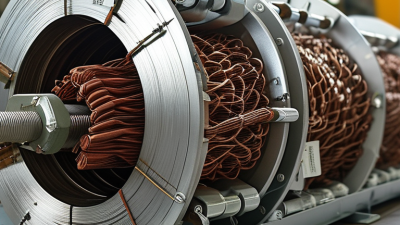
Picking the best stainless steel clad copper manufacturers in China isn’t just about comparing prices or peeking at shiny websites. You really need some solid proof of their experience in manufacturing, how well they control their materials, and whether they keep their quality consistent. You see, stainless steel clad copper is this cool combo — copper’s great for electrical conductivity, while stainless steel gives you strength and resistance to corrosion. But hitting that perfect balance depends on the quality of bonding, the thickness of the cladding, how well the surface is prepared, and precise control over dimensions.
Reputable manufacturers should be upfront about their production methods — things like explosion bonding, hot rolling, or other specialized metallurgical techniques. Plus, you’ll want to see reports on chemical composition, test results for mechanical properties, dimensional measurements, and certificates that trace back to the actual mills they work with. For example, if you’re looking at a stainless steel clad copper hanger bar, details like hole spacing, flatness, edge finishing, and load capacity really matter — because even if a product looks smooth and perfect, it could still give out during installation. That’s a stressful and costly scenario you want to avoid.
And don’t just rely on brochures or shiny websites. It’s a good idea to do factory visits whenever possible. Check out their cutting equipment, ultrasonic inspection setups, welding procedures, and how they package their products. Certifications like ISO 9001 can give some peace of mind, but honestly, having certifications alone doesn’t guarantee every shipment is spot-on. Independent testing is pretty valuable too, especially if you’re using these materials for electrical, marine, construction, or industrial work. Just make sure to verify standards like ASTM, EN, or any specific specs your project demands well before the stuff goes into production.
Remember, there’s no one-size-fits-all “best” supplier out there. The right partner depends on what you need — whether it’s conductivity, resistance to corrosion, order size, tight tolerances, or how quickly they can deliver. Trying out samples helps, but don’t assume that one good sample means every batch will be perfect. It’s smart to compare their production records, how they communicate, how fast they rectify issues, and what kind of support they offer afterward. Taking the time to do your homework isn’t just about being cautious; it can save you from costly surprises down the line.
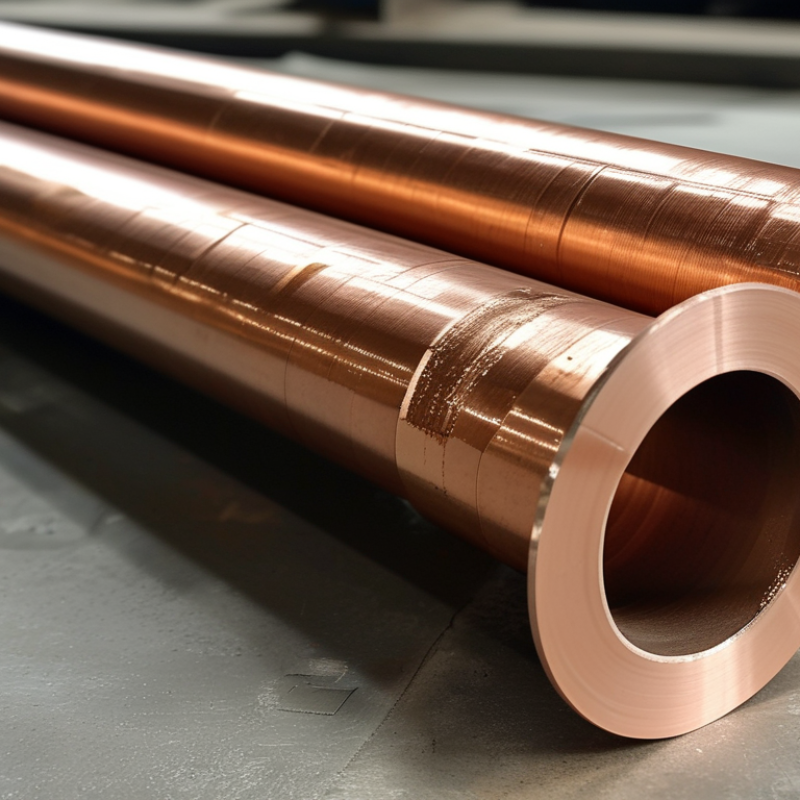
Stainless steel clad copper combines a highly conductive copper core with a protective stainless steel outer layer. The copper carries electrical current efficiently, while stainless steel improves surface durability, corrosion resistance, and mechanical strength. This structure suits busbars, terminals, grounding components, and demanding industrial assemblies.
Manufacturing usually begins with carefully cleaned copper and stainless steel surfaces. Any oil, oxide, or uneven edge can weaken the bond. The prepared metals are aligned and joined through controlled rolling, explosive bonding, or diffusion bonding, depending on thickness and performance requirements. Rolling applies pressure between heated layers, creating a continuous metallurgical connection. Diffusion bonding uses heat and pressure for longer periods. Explosive bonding can join dissimilar metals without melting their main bodies.
Quality checks often include ultrasonic inspection, peel testing, dimensional measurement, and electrical resistance testing. Technicians examine the interface for voids, cracks, and incomplete bonding. The process is precise, but never perfectly forgiving. Poor cleaning may create hidden defects that appear only after bending or thermal cycling. That is why experienced manufacturers record temperature, pressure, rolling speed, and surface condition at each stage.
Compared with a Titanium Clad Copper Busbar, stainless steel clad copper usually offers a more practical balance of cost, strength, and corrosion resistance. However, material selection still depends on conductivity, operating temperature, forming needs, and the surrounding environment. A reliable specification should define cladding thickness, bond strength, flatness, and inspection standards before production begins.
Chinese stainless steel clad copper manufacturers are often chosen for their balanced production capabilities. Many factories combine copper conductivity with stainless steel strength through controlled cladding processes. This structure suits electrical connectors, heat exchangers, cookware components, and industrial assemblies. The copper core carries current or heat efficiently. The stainless surface improves corrosion resistance and mechanical durability.
Experienced manufacturers usually provide mill certificates, chemical analysis, and dimensional inspection reports. Ask for bond-strength data, cladding ratios, surface roughness, and thickness tolerances. Reliable plants may use ultrasonic testing to detect weak bonding areas. Factory audits also reveal important details, such as storage conditions, calibration records, and operator training. These practical checks matter more than polished catalog images.
Cost is another reason buyers compare Chinese suppliers. Large material networks and established metal-processing capacity can support competitive pricing. Custom widths, thicknesses, and coil lengths are often available. Yet a low quotation may conceal limited testing or inconsistent surface quality. Not every factory performs equally. Buyers should review samples, production records, and inspection procedures before placing a large order. Clear drawings and agreed acceptance standards reduce misunderstandings. In my experience, small trial batches expose problems early, although they can slow the purchasing schedule. That inconvenience is worth considering.
Choosing among China’s best stainless steel clad copper manufacturers requires more than comparing prices. Quality starts with stable metallurgical bonding between the stainless steel layer and copper core. Ask for test reports covering bond strength, electrical conductivity, tensile performance, surface condition, and dimensional tolerance. The reports should identify test methods, sample numbers, and inspection dates.
Manufacturing capability is equally important. A reliable producer should explain its cladding process, rolling controls, heat treatment, and final inspection stages. Request material certificates and traceability from raw material to finished coil, strip, or plate. Check whether production equipment can maintain even thickness across the full width. Small variations can affect welding, forming, and electrical performance. They matter.
Experience becomes visible in practical details. Can the technical team recommend suitable grades for high-temperature, corrosive, or conductive applications? Can they provide trial samples before mass production? Certifications aligned with recognized national or international standards add confidence, but certificates alone prove little. I would still verify recent records and inspect actual samples. My own evaluation would leave room for doubt, especially when polished samples hide edge defects.
Tips: Compare three samples, not one. Measure coating thickness at several points. Review packaging for moisture protection. Ask how rejected material is controlled. Keep every approval in writing.
Stainless steel clad copper combines copper’s high electrical conductivity with stainless steel’s resistance to corrosion, wear, and chemical exposure. This layered structure supports demanding industrial applications. It is useful where solid stainless steel conducts too poorly, while bare copper cannot survive the environment.
Power distribution systems often use clad copper for busbars, grounding components, and flexible connectors. Copper carries current efficiently, while the stainless surface tolerates moisture, salt spray, and repeated handling. In coastal substations, technicians may inspect contact surfaces for oxidation, uneven bonding, and heat marks. Small defects can increase resistance.
The material also serves in heat transfer equipment, electrochemical processing, marine hardware, and transportation systems. Stainless steel clad copper plates can transfer heat through tanks or cooling assemblies without exposing copper directly to aggressive fluids. Some plating lines use a Titanium Clad Copper Hanger Bar for reliable current delivery and chemical durability. That is a different construction, but the application principle is similar.
Fabricators usually evaluate cladding thickness, bond strength, flatness, and electrical resistance before installation. Poor surface preparation can weaken an otherwise attractive product. I would not specify it automatically for every project. Cost, forming limits, operating temperature, and maintenance access still matter. In practice, the best performance often depends on careful joint design rather than material selection alone.
| Top Application | Typical Product Form | Common Material Combination | Why Stainless Steel Clad Copper Is Used | Relevant Technical Data | Key Design and Purchasing Considerations |
|---|---|---|---|---|---|
| Electrical Busbars and Power Connectors | Flat bars, plates, terminals and formed connector parts | 304 or 316L stainless steel outer layer with a high-conductivity copper core such as C10100 or C11000 | Combines copper's low electrical resistance with stainless steel's surface strength, wear resistance and corrosion resistance. | Copper has approximately 385–401 W/m·K thermal conductivity at room temperature and approximately 100% IACS conductivity when annealed. 304 stainless steel is typically about 14–16 W/m·K thermally conductive and has much lower electrical conductivity. | Specify current rating, allowable temperature rise, copper cross-sectional area, stainless-layer thickness, contact resistance and the required joining method. |
| Grounding, Earthing and Bonding Components | Grounding plates, straps, clamps and transition connectors | Corrosion-resistant stainless steel surface bonded to copper or copper alloy | Provides a durable exposed surface while retaining a conductive copper path for grounding and bonding. | Electrical performance depends mainly on the continuous copper section, bond integrity, joint resistance and contact pressure. | Check outdoor exposure, salt spray or soil conditions, galvanic compatibility with adjacent metals, fastener material and long-term contact resistance. |
| Switchgear and Electrical Contact Hardware | Contact supports, transition plates, mounting parts and current-carrying fittings | Stainless steel wear-facing layer with copper conductive backing | Improves mechanical durability and resistance to handling damage while maintaining a low-resistance current path. | Important parameters include contact resistance, short-circuit current, thermal cycling, hardness, spring force and surface finish. | Confirm whether the stainless surface is intended to be a structural surface or an electrical contact surface; plating or a separate contact material may be required for the final interface. |
| Heat Exchanger and Thermal Management Parts | Sheets, plates, heat spreaders, base plates and bonded panels | Stainless steel corrosion-facing layer with a copper heat-spreading core | Uses copper's high heat-transfer capability together with stainless steel's resistance to many wet, humid or mildly corrosive environments. | Copper thermal conductivity is roughly 25–30 times higher than that of common austenitic stainless steel grades at room temperature. | Evaluate thermal contact resistance, differential thermal expansion, fluid chemistry, operating pressure, temperature cycling and bond-line continuity. |
| Cookware and Induction-Compatible Bases | Three-layer or multi-layer discs, pans and formed sheet products | Food-contact stainless steel, copper core and stainless steel or another compatible backing layer | Stainless steel offers a durable, cleanable cooking surface while copper distributes heat rapidly and evenly. | Typical constructions use a copper core between stainless steel layers; exact layer thickness depends on heat-spreading, forming and weight requirements. | Verify food-contact compliance, adhesion after forming, flatness, thermal cycling performance, magnetic response of the exterior layer and compatibility with induction cooktops. |
| Chemical and Process Equipment | Vessel plates, covers, liners, transition sections and fabricated panels | 316L stainless steel corrosion-facing layer with a copper core where thermal or electrical performance is needed | Can reduce the amount of expensive stainless material while using copper for heat transfer or electrical continuity. | 316L contains molybdenum and generally provides better resistance to chloride-related corrosion than 304 stainless steel, although neither grade is suitable for every chemical service. | Base material selection must consider chemical concentration, chloride level, temperature, pressure, weldability, cladding continuity and inspection requirements. |
| Marine and Coastal Electrical Hardware | Busbars, mounting plates, cable transition parts and grounding components | 316 or 316L stainless steel exterior with a copper conductive core | Offers a corrosion-resistant exterior for humid or salt-laden environments while preserving copper's electrical conductivity. | Chloride exposure can cause localized corrosion in susceptible stainless steels; 316/316L is commonly considered for more demanding marine environments than 304/304L. | Consider crevice design, drainage, sealing, surface contamination, galvanic coupling, protective coatings and the actual saltwater exposure level. |
| Architectural and Decorative Transition Components | Strips, trims, panels, inserts and bonded decorative plates | 304 stainless steel visible surface with copper backing or a copper-colored exposed edge | Combines stainless steel's abrasion resistance and appearance with copper's formability, weight distribution or thermal and electrical function. | Surface appearance depends on stainless finish, flatness, bond uniformity, edge treatment and exposure to moisture or pollutants. | Specify finish such as 2B, brushed or polished, permissible color variation, edge visibility, forming radius, cleaning method and indoor or outdoor service conditions. |
| High-Current Welding and Specialized Tooling | Electrode holders, conductive tooling plates and wear-resistant fixtures | Stainless steel wear or support layer bonded to a copper current-carrying core | Provides a balance between electrical and thermal conductivity in the core and mechanical resistance on the working surface. | Performance is governed by current density, heat dissipation, contact pressure, duty cycle, hardness and the thermal stability of the bond. | Define peak and continuous current, cooling conditions, working temperature, abrasion level, machining allowance and allowable distortion after bonding. |
Technical values are representative room-temperature reference data. Final stainless grade, copper grade, layer ratio, thickness, bonding process and inspection requirements should be selected according to the application, operating environment and applicable product specification.
When comparing Chinese stainless steel clad copper manufacturers, begin with measurable evidence, not polished brochures. World Stainless reported about 58.4 million tonnes of global crude stainless steel production in 2023. This scale supports broad processing capacity, but it does not prove reliable cladding quality. Request mill certificates, copper and stainless grades, cladding ratios, plate dimensions, and bonding-process details. For a Gr2titanium Clad Copper Hanger Bar, verify that Grade 2 titanium is genuinely used, rather than accepting a vague “titanium alloy” description.
Price comparisons need the same specification. The USGS Mineral Commodity Summaries 2024 reported approximately 22 million tonnes of global copper mine production in 2023. Copper content, titanium availability, rolling tolerances, order volume, and export packing can change the final quote. Ask whether the price includes ultrasonic testing, edge trimming, inspection, and delivery. A low quote can look clever. It may also hide thinner copper, weaker bonding, or fewer tests.
For serious evaluation, compare sample results beside the quotation. Check surface flatness with a straightedge, measure thickness at several points, and request bond-strength or peel-test records. Independent laboratory verification adds credibility when values seem unusually perfect. Factory experience matters, but production records matter more. One imperfect detail deserves attention: some suppliers provide excellent samples, then alter subcontracting arrangements for larger orders. Confirm the actual production site, inspection responsibilities, rejection procedures, and replacement terms before paying.
China Best Stainless Steel Clad Copper Manufacturers? Questions to Ask Before Selecting a Reliable Supplier
Ask how the supplier controls copper purity, stainless grade, cladding thickness, and bonding strength. These details matter because copper reached about 22 million metric tons of mine production in 2023, according to the USGS Mineral Commodity Summaries 2024. Request mill certificates, heat numbers, and independent test reports. Do not accept a general compliance statement.
Ask which standards guide ultrasonic inspection, peel testing, dimensional checks, and corrosion testing. ISO 9001 certification supports process control, but it does not prove every clad bar is metallurgically sound. World Steel Association data recorded nearly 1.9 billion tonnes of crude steel production in 2023. That scale makes traceability more important, not less. Review sample records from actual production batches.
Also confirm lead times, minimum order quantities, packaging, and corrective-action procedures. A serious manufacturer should explain how it handles voids, edge separation, or uneven cladding. If the project includes a Gr2 Titanium Clad Copper Hanger Bar, ask whether the same inspection discipline applies. It may not. Visit the factory when possible, and compare a cut sample with the approved drawing. A polished certificate is not enough. My own checklist would include unanswered questions, because assumptions often become expensive defects.
: It has a conductive copper core and a protective stainless steel outer layer. Copper carries current efficiently. Stainless steel adds strength, surface durability, and corrosion resistance.
Clean copper and stainless steel surfaces are aligned carefully. Controlled rolling usually joins the layers through heat and pressure. Diffusion bonding may use longer heating periods. Surface preparation matters greatly.
Common uses include busbars, terminals, grounding parts, heat exchangers, and industrial assemblies. It can carry electrical current or transfer heat. The stainless surface supports demanding environments.
Many manufacturers offer custom widths, thicknesses, and coil lengths. Established processing networks may support competitive pricing. Some factories also provide certificates and inspection reports. Low prices can hide weak testing.
Request material certificates, chemical analysis, dimensional reports, and bond-strength data. Electrical conductivity and tensile results are also useful. Each report should show test methods, dates, and sample numbers. A certificate is not enough.
Ultrasonic inspection can detect voids, cracks, and incomplete bonding. Peel testing helps assess interface strength. Dimensional checks confirm thickness and flatness. Testing should cover several points, not one location.
Ask about rolling pressure, temperature, speed, heat treatment, and surface cleaning. Request traceability from raw material to finished product. Review calibration records and storage conditions. Small records reveal large problems.
Compare at least three samples when possible. Measure cladding thickness across different areas. Inspect edges for uneven layers or hidden defects. Trial batches may delay purchasing, but they expose problems early. That delay may be worthwhile.
This article explains what Stainless Steel Clad Copper is, how it is manufactured, and why its combination of corrosion resistance, electrical conductivity, strength, and cost efficiency makes it valuable across multiple industries. It examines the main production methods, material bonding considerations, and quality factors that buyers should understand before placing an order.
The guide also explores why Chinese manufacturers are often considered for stainless steel clad copper projects, focusing on production capacity, customization, technical support, and supply efficiency. It outlines key standards for evaluating quality and capability, reviews common applications, and explains how to compare products, specifications, pricing, lead times, and after-sales service. Finally, it provides practical questions to ask potential suppliers so buyers can select a reliable manufacturer with consistent quality, suitable certifications, stable production processes, and clear communication.