






China Suppliers of Multilayer Metal Composite Bar Materials | Factory for Titanium, Copper, and Stainless Steel Clad Products
Product Performance & Specification Range
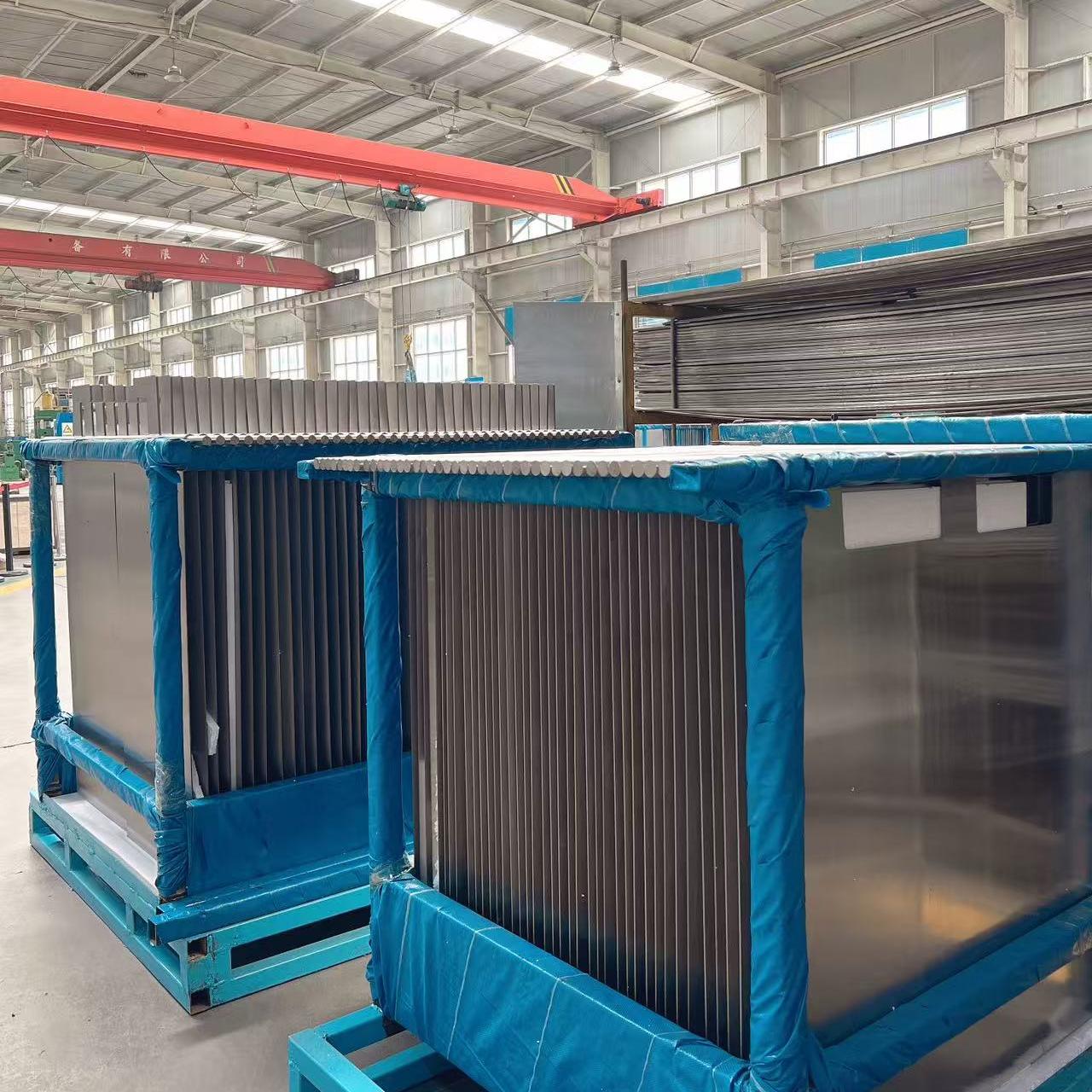
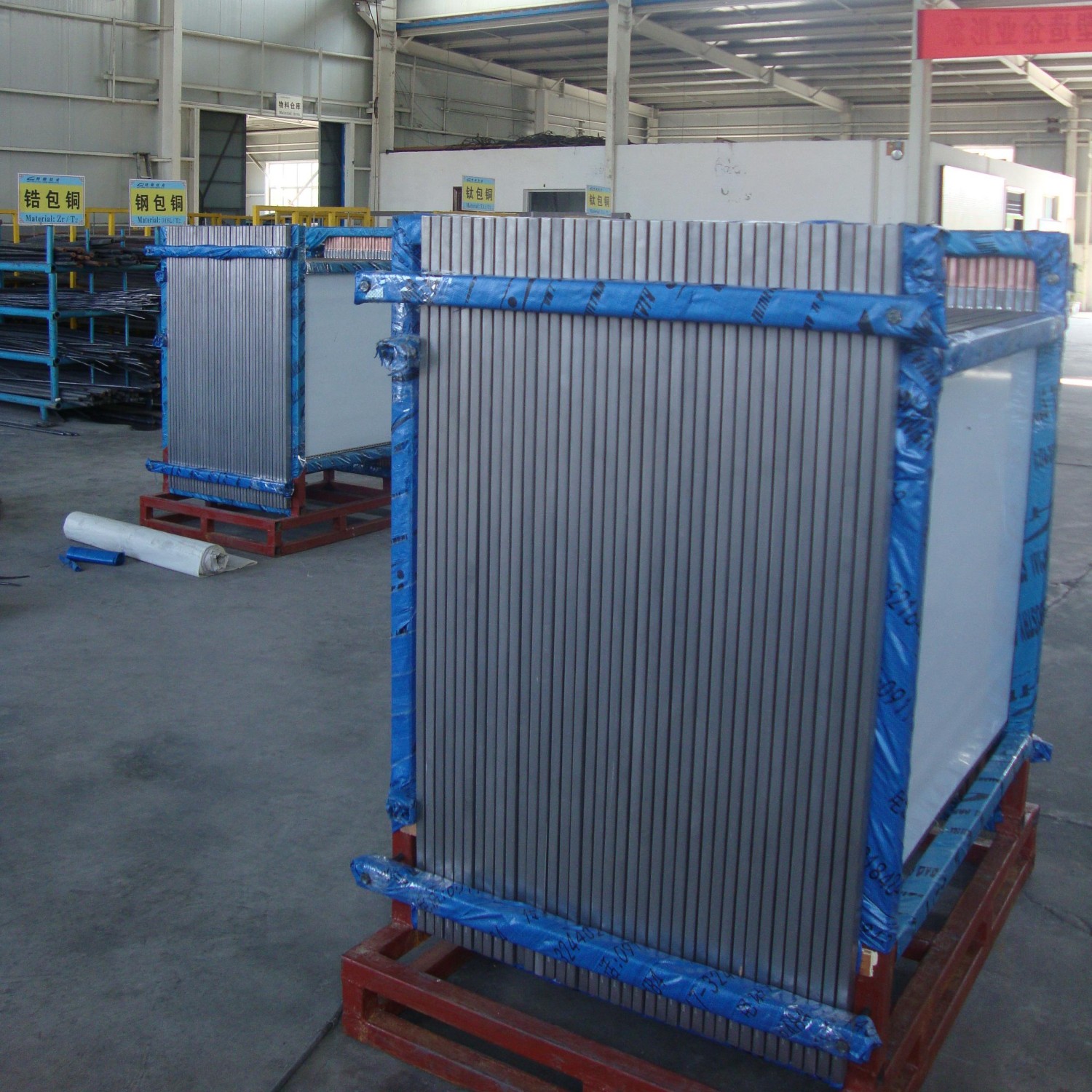
Baoji special steel titanium industry Co.,Ltd. since 2001 start manufacture metal composite material series product, after 25 years of hard work development, we have set up a perfect specialized metal composite material production line.
Reference Standard: GB/T 12769-2015
Material Range
- Clad Materials: Titanium GR1, Gr2, TA1, TA2, Stainless Steel (304, 316L), etc.
- Intermediate Layer: Copper T1, T2, Anaerobic Copper TU1, TU2, etc.
- Inner Layer Material: Stainless Steel (304, 316L), Steel (Q235), etc.
Main Cross-Section Dimensions
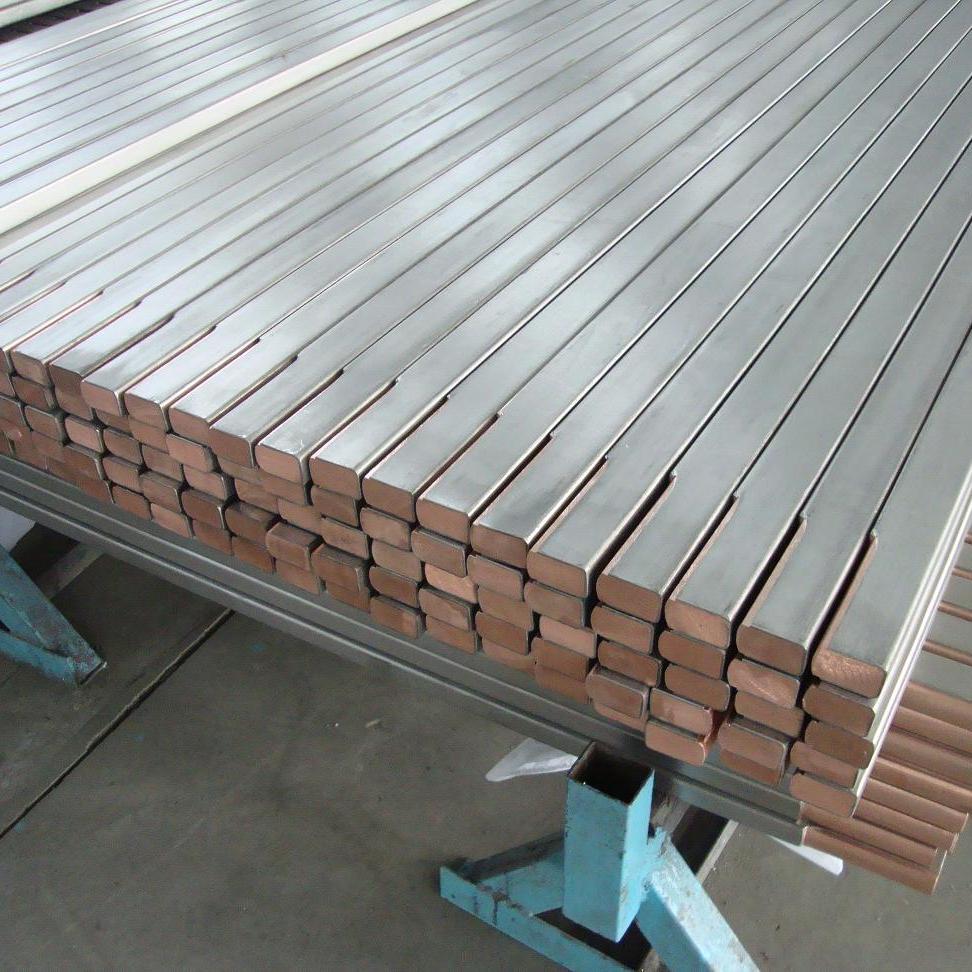
- Rectangular: Width (20 ~ 150 mm) × Thickness (6 ~ 30 mm)
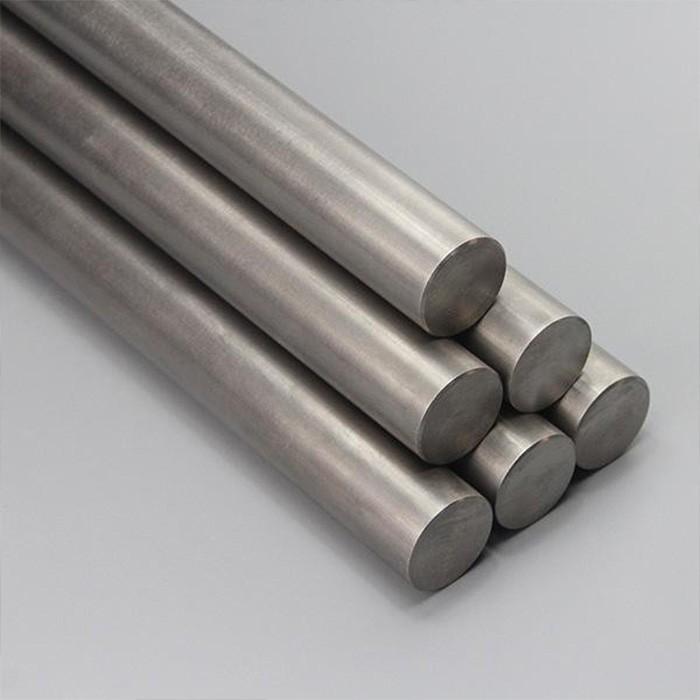
- Circle: Φ (8 ~ 50 mm)
- Square Model: (10 ~ 30 mm)
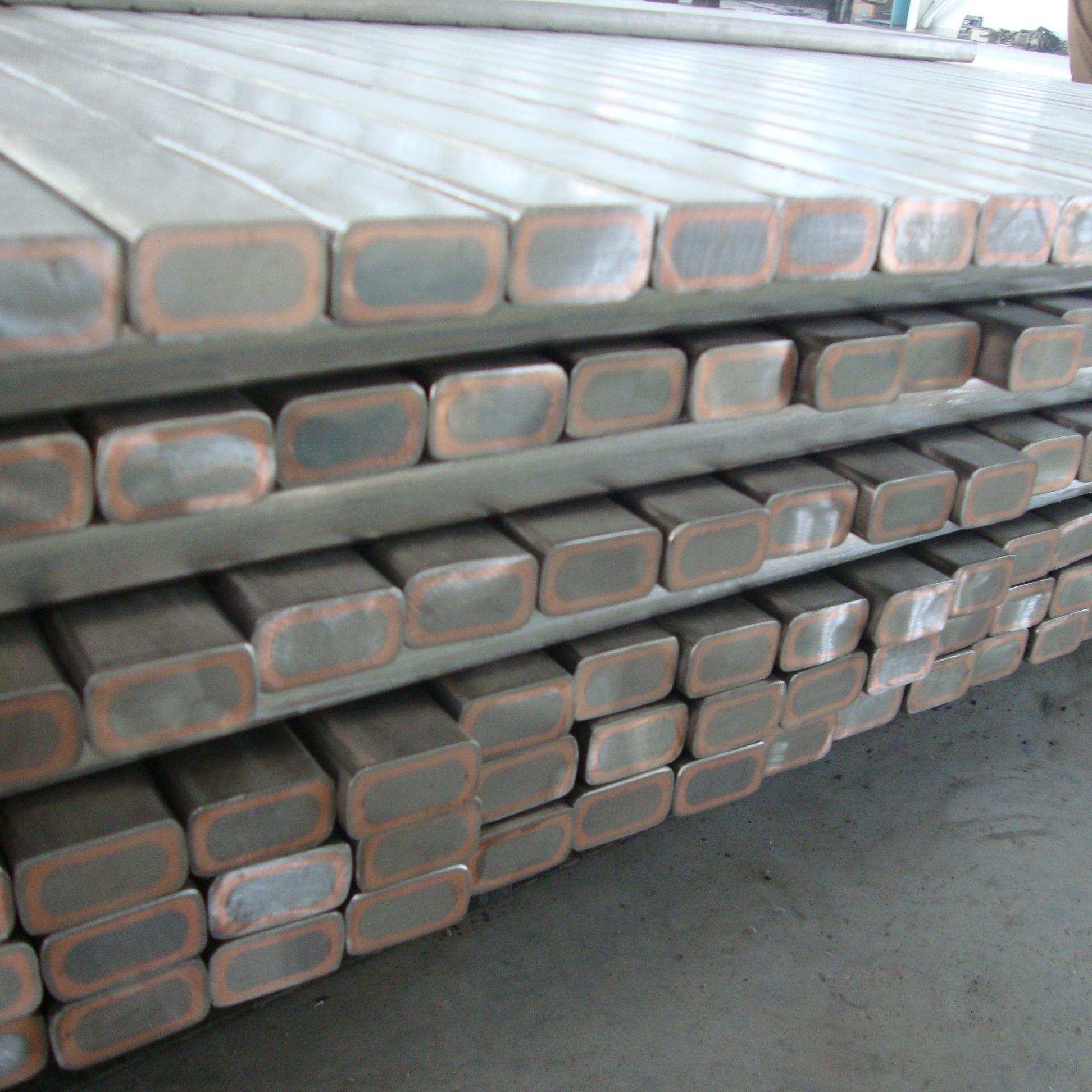
Product Display
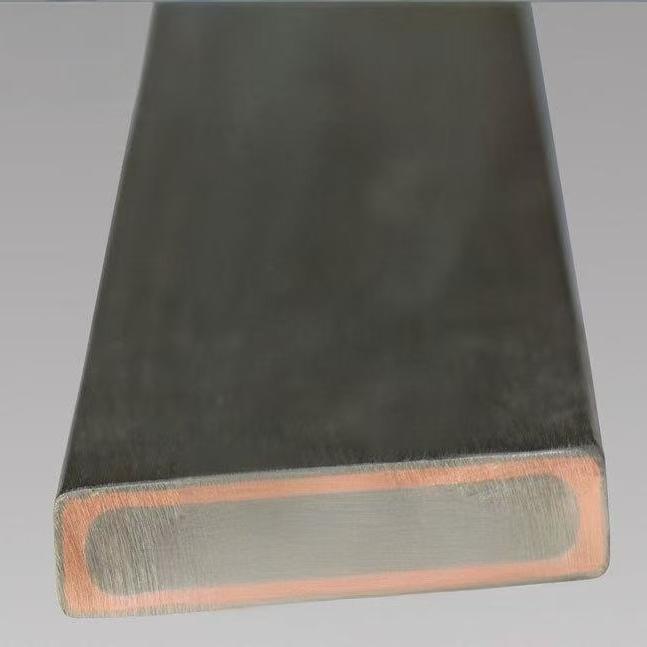
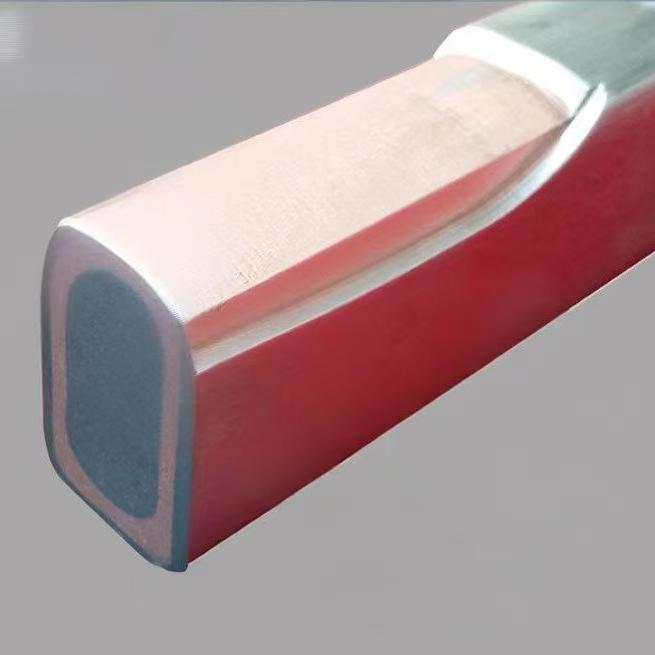
High-Performance & Low-Cost Product Structure
The essence of this structure lies in the firm combination of the three through metallurgical methods (such as explosive cladding and rolling cladding), achieving a performance of "1 + 1 + 1 > 3".
Outer Layer - Titanium (Ti)
Function: Provides excellent corrosion resistance and biocompatibility.
Performance Contribution: Resists seawater, acidic environments, and chloride ion corrosion; low density reduces weight; aesthetically pleasing surface.
Middle Layer - Copper (Cu)
Function: Offers superior electrical and thermal conductivity, serving as a functional transition and buffer layer.
Performance Contribution: Acts as an electrical/thermal bridge for primary current/heat paths. Relieves thermal stress between titanium and steel, prevents brittle intermetallic compounds, enhances bonding strength, and improves production feasibility.
Inner Layer / Base Layer - Steel (Stainless Steel / Carbon Steel)
Function: Provides main structural strength, rigidity, and toughness while significantly reducing costs.
Performance Contribution: High mechanical strength, exceptional processability (welding/machining), and an economical base material.
Summary of Comprehensive Performance:
- "External corrosion resistance + medium-high conductivity + internal high strength": Surface resists corrosion, middle layer conducts efficiently, inner layer bears mechanical load.
- Excellent electrochemical compatibility: Engineered potential sequence positions of titanium and copper meet specific functional requirements (e.g., cathodic protection).
- Good thermal expansion matching: Copper layer relieves stress caused by differing thermal expansion rates between titanium and steel.
- High cost performance: Utilizes economical steel as a base, significantly lowering production costs compared to solid titanium or thick copper bars.
Main Purposes & Application Fields
Ti/Cu/Steel clad material is engineered to fulfill extreme and multi-functional requirements across key industrial sectors:
Specific Application: Special electrolytic electrodes and anode baskets. Used in the electrolysis of corrosive media (such as chlorine-containing environments), the titanium layer resists corrosion, the copper layer ensures uniform current distribution, and the steel layer serves as a framework. Also used as conductive structural components in highly corrosive settings.
Specific Application: Hybrid grounding and lightning protection systems for ships. Titanium resists seawater corrosion, copper provides a low-resistance path, and steel provides structural support. Also utilized as auxiliary anodes and specialized connectors in Cathodic Protection Systems requiring dual conductivity and corrosion resistance.
Specific Application: Integrated conductive and structural components for core nuclear plant systems. Used in control rod drive mechanisms and measurement assemblies requiring titanium's primary circuit high-temperature/pressure water resistance, copper's low-loss transmission, and steel's weldable load-bearing base.
Specific Application: Parts demanding light weight, high strength, superior electrical performance, and weather resistance. Ideal for specialized grounding units, electromagnetic shielding, structural conductivity, and copper-driven electromagnetic pulse (EMP) protection.
Specific Application: Vacuum chambers and beamline assemblies for particle accelerators and synchrotron radiation facilities. Titanium enables ultra-high vacuum with low outgassing rates, copper provides cooling and high-frequency current conduction, and steel ensures structural integrity.