Leave Your Message
In the rapidly evolving landscape of global energy production, the demand for materials that can withstand extreme environmental conditions while maintaining structural integrity has never been higher. The Titanium Alloy Sheet for Energy and Power Projects has emerged as a cornerstone material, fundamentally transforming how engineers approach the design and lifecycle management of critical infrastructure. Unlike traditional steel or aluminum, titanium alloys offer an unparalleled combination of high strength-to-weight ratio, exceptional corrosion resistance, and remarkable performance under high-temperature and high-pressure conditions. These inherent properties make titanium sheets indispensable in the transition from fossil fuel dependency to sustainable, renewable energy matrices.
The commercial and industrial status of titanium alloy sheets is currently experiencing a dynamic shift. Historically confined to aerospace and military applications due to high extraction and processing costs, advancements in metallurgical technologies—such as the optimization of the Kroll process and the integration of AI-driven supply chain management—have significantly lowered the barrier to entry for the energy sector. Today, the global market for industrial-grade titanium is witnessing a robust Compound Annual Growth Rate (CAGR), driven predominantly by massive investments in green energy infrastructure across North America, Europe, and the Asia-Pacific regions.
From a supply chain perspective, the production of titanium alloy sheets involves a complex global network. Raw materials like ilmenite and rutile are mined and refined into titanium sponge, which is then melted and alloyed—often with elements like aluminum, vanadium, or molybdenum—to achieve specific mechanical properties. In the context of energy and power projects, grades such as ASTM Grade 2 (commercially pure) and Grade 5 (Ti-6Al-4V) are highly sought after. Major industrial players are increasingly forming strategic partnerships with specialized titanium mills to secure long-term contracts, ensuring a steady supply of high-grade sheets necessary for gigawatt-scale power plants and offshore installations. The economic viability of these materials is no longer judged solely on initial capital expenditure, but rather on the Total Cost of Ownership (TCO), where titanium's longevity drastically reduces maintenance downtime and replacement costs.
Rapid adoption in renewable sectors is driving global market growth, pushing economies of scale and lowering production costs.
Seamless integration into existing manufacturing pipelines, utilizing advanced welding and forming techniques tailored for energy grids.
Exceptional lifecycle ROI. Reduced maintenance, zero corrosion failure, and extended operational lifespans offset initial investments.
As we look toward 2030 and beyond, the trajectory of Titanium Alloy Sheet manufacturing is being heavily influenced by Industry 4.0 technologies. The integration of Artificial Intelligence (AI) and Machine Learning (ML) into metallurgy is a game-changer. AI algorithms are now being utilized to predict the microstructural behavior of titanium alloys during the rolling and annealing processes. By analyzing vast datasets of temperature gradients, pressure metrics, and cooling rates, AI systems can optimize manufacturing parameters in real-time. This results in titanium sheets with zero internal defects, perfectly uniform grain structures, and enhanced mechanical properties tailored specifically for the rigorous demands of power generation.
Another significant trend is the rise of advanced surface engineering. While titanium is naturally corrosion-resistant due to its passive oxide layer, energy projects often expose materials to hyper-aggressive environments. Innovations in nano-coatings and laser surface texturing are further elevating the performance of titanium sheets. For instance, in heat exchanger applications, micro-patterned titanium surfaces can dramatically increase the heat transfer coefficient, thereby improving the overall thermal efficiency of power plants. Furthermore, the push towards a circular economy is fostering new recycling technologies. Aerospace-grade titanium scrap is being remelted and repurposed into industrial-grade sheets for the energy sector, significantly reducing the carbon footprint associated with primary titanium production.
Additive manufacturing, or 3D printing, is also intersecting with traditional sheet production. While large-scale sheets are still predominantly rolled, hybrid manufacturing techniques are allowing for complex, topology-optimized titanium components to be directly welded or bonded to titanium sheets. This is particularly relevant in the design of next-generation fuel cells and compact heat exchangers, where space and weight are at a premium, yet structural integrity cannot be compromised.
In the nuclear sector, safety and reliability are paramount. Titanium alloy sheets are extensively utilized in the fabrication of surface condensers and steam generator tubing. The primary cooling loops of nuclear reactors often utilize seawater or brackish water, which is highly corrosive to traditional alloys. Titanium's absolute immunity to microbiologically influenced corrosion (MIC) and its resistance to pitting and crevice corrosion in chloride-rich environments make it the ultimate choice. Furthermore, titanium sheets maintain their mechanical properties under continuous radiation exposure, ensuring the containment and cooling systems operate flawlessly over the reactor's 60-plus year lifespan.
Geothermal power plants harness heat from the earth's crust, but the geothermal brines brought to the surface are notoriously aggressive—often superheated and laden with corrosive chlorides, hydrogen sulfide, and silica. Standard stainless steel sheets degrade rapidly in such conditions. Titanium alloy sheets, particularly those alloyed with palladium or ruthenium (such as ASTM Grade 7 or 16), exhibit extraordinary resistance to these harsh brines. They are used to construct brine-to-hydrocarbon heat exchangers, flash vessels, and piping systems, drastically reducing plant downtime and preventing catastrophic failures that could halt power generation.
The shift towards offshore wind farms and tidal energy converters presents unique material challenges, primarily due to the relentless assault of saltwater spray and submerged marine environments. Titanium sheets are increasingly being specified for critical structural components, fastener systems, and protective claddings on transition pieces. Unlike steel, titanium does not require expensive, ongoing cathodic protection systems or toxic anti-corrosion paints. Its exceptional fatigue strength also ensures that components subjected to constant wave action and wind vibrations do not succumb to stress corrosion cracking, thereby securing the long-term viability of marine energy projects.
As green hydrogen takes center stage in the clean energy transition, titanium is playing an indispensable role in electrolyzers and Proton Exchange Membrane (PEM) fuel cells. Titanium alloy sheets are precision-stamped to create bipolar plates, which are critical for gas distribution and electrical conduction within the fuel cell stack. The material must resist the acidic environment of the PEM while maintaining high electrical conductivity. Advanced titanium sheets, often treated with specialized conductive coatings, prevent the passivation that would otherwise increase electrical resistance, thereby maximizing the efficiency of hydrogen production and power output.
Even in transitional energy projects, such as High-Pressure High-Temperature (HPHT) deepwater drilling and Carbon Capture and Storage (CCS) facilities, titanium sheets are vital. In CCS, amine scrubbing towers utilize titanium internals to withstand the corrosive nature of the capturing solvents. In deepwater applications, the high strength-to-weight ratio of titanium allows for the construction of lighter risers and subsea equipment, reducing the buoyancy requirements and overall structural load on offshore platforms.
Ultimately, the deployment of Titanium Alloy Sheets in Energy and Power Projects represents a paradigm shift. It is a transition from reactive maintenance and frequent component replacement to a proactive, lifecycle-optimized engineering philosophy that aligns perfectly with the goals of global energy sustainability.

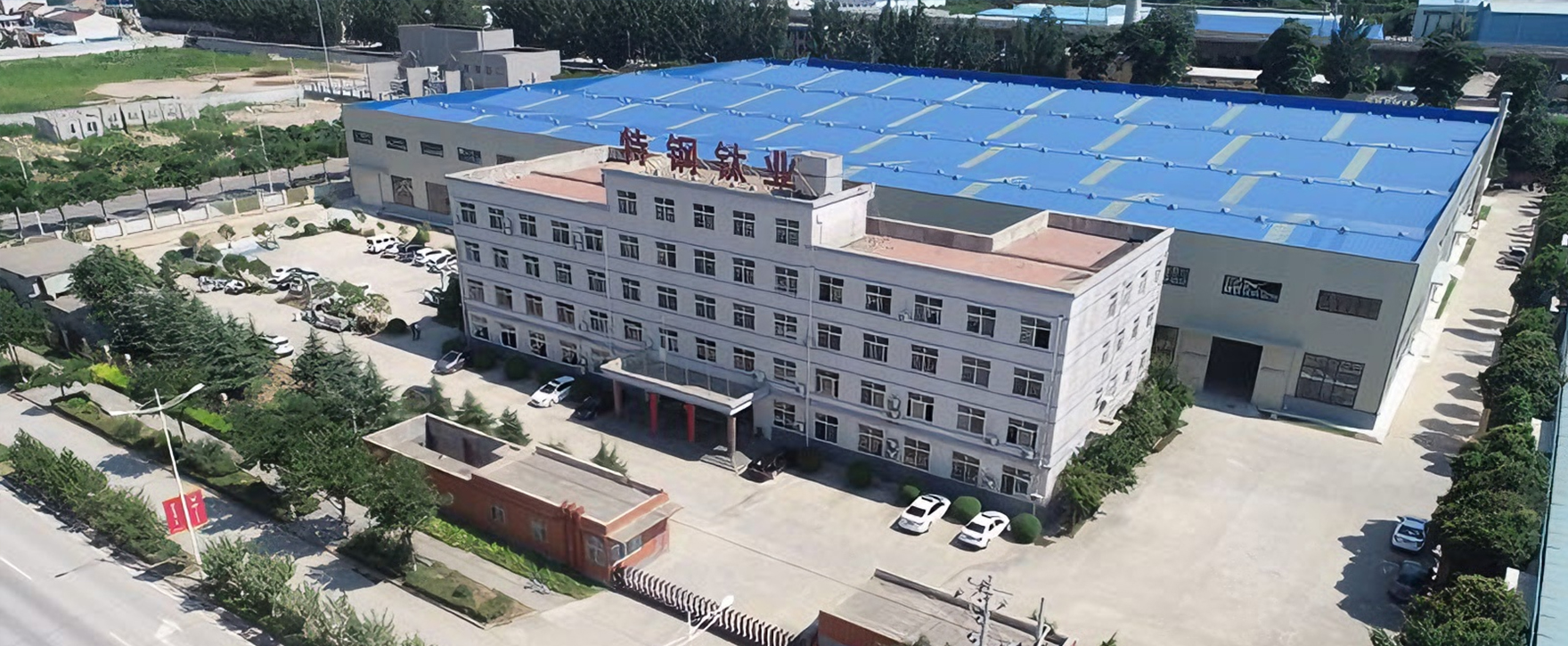
Baoji Special Steel Titanium Industry Co., LTD. is a joint-stock industrial enterprise specializing in the research, development, manufacturing, and sales of titanium, nickel, zirconium, and other metal pipes and metal composite materials. Located in Shaanxi Baoji National High-tech Industrial Development Zone, our factory covers an area of 41,000 square meters.
 World-Class Quality & Unparalleled Standards
 Custom-Tailored Solutions & Swift Execution
 Streamlined Logistics & Global Reach




Stable product quality, integrity as the core of the business philosophy, trusted by global energy customers.

Powering Global Mining & Energy Operations with Precision Titanium Solutions.

Advanced metallurgical equipment integration for sustainable resource extraction.

Titanium materials supporting new energy battery supply chains.
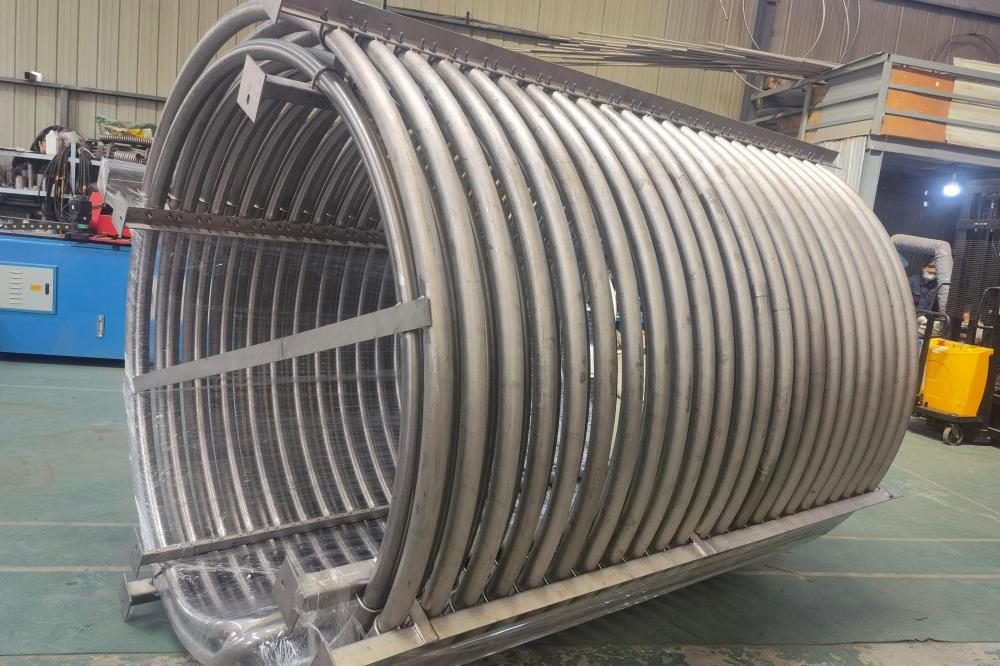
High-grade titanium deployment in complex chemical energy processing.
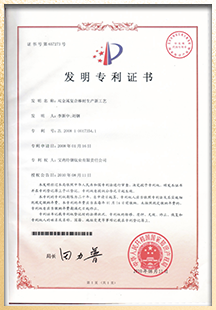
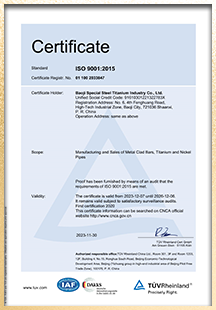
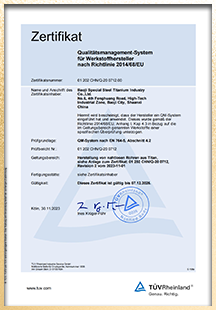
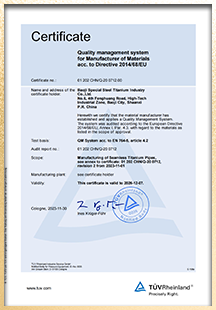
IATF 16949, CE, FMEA, PPAP, APQP, SPC AND MSA 100% TEST